
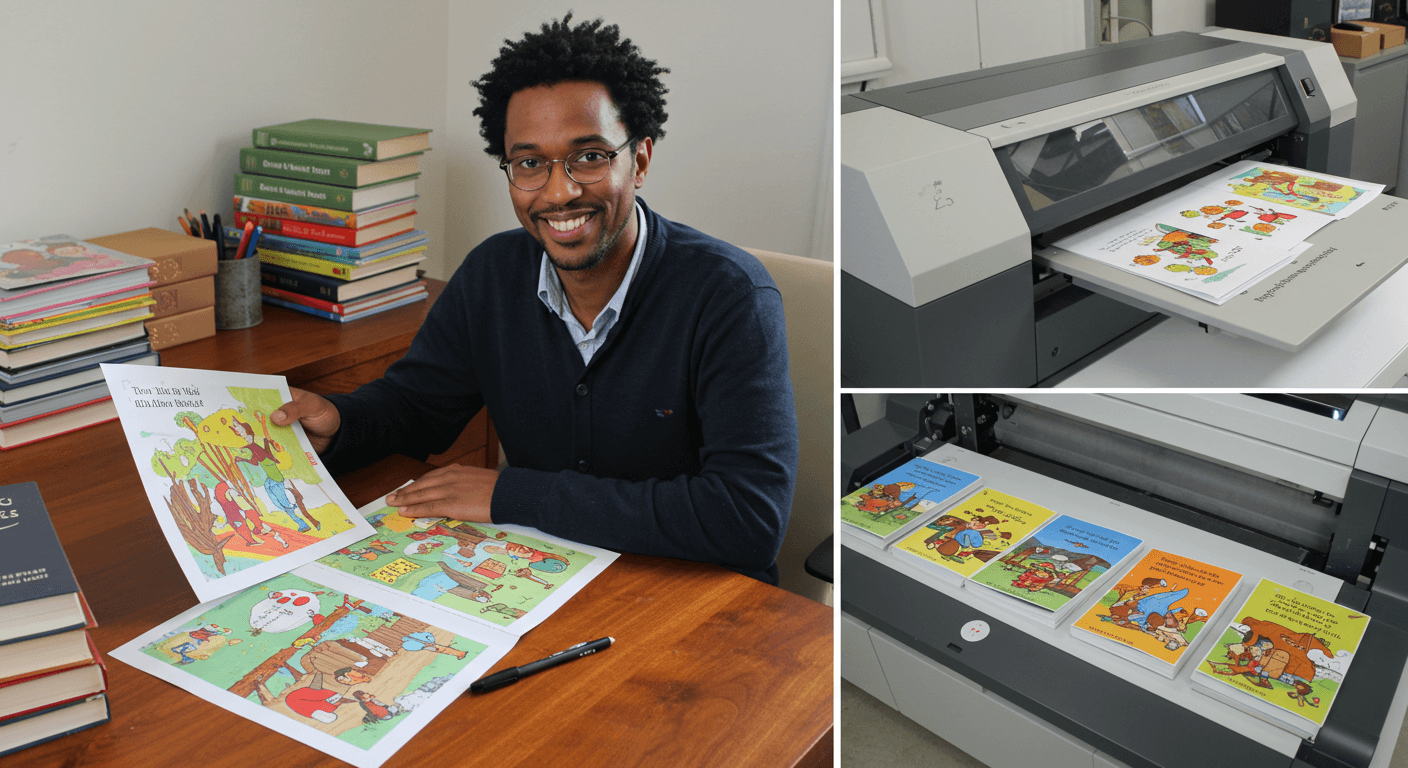
Creating a kids’ book is a magical endeavor. It’s about more than just telling a story; it’s about building worlds, sparking imaginations, and often, shaping young minds. While it might seem simpler than writing an adult novel, a successful children’s book requires a unique blend of creativity, understanding of child psychology, and a surprising amount of strategic planning.
This guide will explore the journey of making a kids’ book, from the initial spark of an idea to holding the finished product, with insights from a ghostwriting perspective thrown in for good measure.
The Heart of the Story: Writing for Young Readers
Writing a kids’ book begins with a clear understanding of its audience. Children, depending on their age, have different attention spans, vocabularies, and interests.
1. Know Your Age Group
This is the most crucial first step. The age of your intended reader dictates everything: word count, sentence structure, complexity of themes, and illustration style.
- Board Books (Ages 0-3): Very simple stories, often focusing on concepts (colors, numbers), animals, or daily routines. High-contrast, durable pages. Very few words per page, strong rhythm and repetition.
- Ghostwriting insight: Clients often want board books for very specific learning goals or to introduce basic family values. The challenge is to convey these simply and engagingly.
- Picture Books (Ages 3-8): The most common category. Stories with a clear beginning, middle, and end. Themes often revolve around emotions, social skills, problem-solving, or imagination. Word counts typically range from 300 to 800 words. Illustrations are paramount, often telling as much of the story as the text.
- Ghostwriting insight: Here, the ghostwriter acts as a storyteller and a “word-economist.” Every word counts, as illustrations will fill much of the narrative space. A client might have a wonderful concept, but it’s the ghostwriter’s job to distill it to its picture-book essence.
- Early Readers (Ages 5-9): Bridge the gap between picture books and chapter books. Simple vocabulary and sentence structure, larger font, more text than picture books, but still with illustrations on most pages. Focus on emerging literacy.
- Chapter Books (Ages 7-10 / 8-12): Longer stories with more complex plots and multiple chapters. Fewer illustrations, typically black and white. Characters often face challenges that require perseverance or wit.
- Ghostwriting insight: These often involve developing series concepts. A client might have a character idea, and the ghostwriter helps flesh out the world, supporting characters, and plot arcs for multiple books.
- Middle Grade (Ages 8-12): More complex themes, longer page counts, fewer (or no) illustrations. Deals with friendship, family, identity, and larger world issues.
- Young Adult (YA) (Ages 12+): Covers a wide range of genres, similar to adult fiction, but with protagonists typically in their teens. Explores themes of independence, first love, social justice, and coming-of-age.
2. Crafting Your Story: Elements of Engagement
Once the age group is defined, focus on the story’s core.
- Relatability: Children connect with characters and situations they can see themselves in, even if the setting is fantastical. Emotions are universal.
- Clear Plot: A simple, direct plot works best, especially for younger readers. A clear problem, rising action, climax, and resolution.
- Character: A strong, memorable protagonist is key. What do they want? What stands in their way? What do they learn? Even animal characters should have relatable personalities.
- Theme/Message (But Don’t Preach): Most kids’ books have an underlying message (kindness, bravery, sharing), but it should be woven naturally into the story, not stated overtly.
- Pacing and Rhythm: For younger books, a good read-aloud quality is vital. Use repetition, alliteration, and varied sentence lengths to create flow.
- Show, Don’t Tell: Instead of saying a character is sad, describe them with slumped shoulders and a tear in their eye. Illustrations are a powerful tool for showing.
- Word Choice: Use vocabulary appropriate for your age group, but don’t be afraid to introduce one or two new words if they fit the context and can be understood visually.
- The “Picture Book Manuscript” Format: For picture books, the text is often broken down page by page, indicating where illustrations will appear (e.g., “Page 1: [Text] [Illustration Notes]”). This helps both the writer and potential illustrators visualize the flow.
- Ghostwriting insight: A ghostwriter often acts as a children’s literature expert, ensuring the language is age-appropriate and the narrative beats align with industry standards for specific age categories. They can also help clients who have an idea but struggle to simplify it or make it engaging for kids.
Bringing Words to Life: Illustrating Your Book
Illustrations are integral to kids’ books, especially for younger readers. For picture books, the images carry half (or more) of the storytelling load.
1. Understanding the Role of Illustrations
- Storytelling: Illustrations aren’t just decorations; they tell the story, convey emotions, and provide details that the text might not.
- Pacing: They help control the pace of the read, guiding the eye and allowing moments of pause.
- Character Development: Visuals bring characters to life, showing their expressions, actions, and personality.
- World-Building: They create the visual world the characters inhabit, making it real for the reader.
2. Finding an Illustrator (or Illustrating Yourself)
- If You’re Not an Artist:
- Portfolios: Look at illustrators’ online portfolios (e.g., Behance, ArtStation, SCBWI illustrator directory, children’s book illustrator agencies). Find someone whose style matches your story’s tone.
- Budget: Illustrators’ fees vary widely depending on experience, style, and the number of illustrations. A full picture book can cost anywhere from a few hundred to several thousand dollars. Get a clear contract outlining deliverables and payment schedule.
- Communication: Clear communication is vital. Provide a detailed storyboard or dummy book (a mock-up of the book showing text placement and rough sketches for each page) to guide the illustrator.
- If You Are an Artist:
- Develop Your Style: Practice and refine your unique artistic voice.
- Study Other Kids’ Books: Analyze how illustrations tell stories, use color, and convey emotion.
- Digital vs. Traditional: Decide on your medium (e.g., watercolor, acrylics, digital art).
- Dummy Book: Create a dummy book (sketches for each page with text) to plan out the visual flow before finalizing the art.
3. The Illustration Process
Typically, this involves several stages:
- Thumbnails/Rough Sketches: Small, quick sketches to plan out compositions and page turns.
- Character Sketches: Developing the look of the main characters.
- Pencil Dummies/Storyboards: More detailed sketches, laid out in the book format, showing exactly where text will go and what each illustration will depict. This is a crucial stage for feedback.
- Final Art: Creating the finished, colored illustrations.
Getting Your Book Out There: Publishing Tips
Once the manuscript is polished and the illustrations are complete, the next step is publishing. There are two main paths: traditional publishing and self-publishing.
1. Traditional Publishing
This involves submitting your manuscript to a literary agent or directly to a publishing house.
Pros:
-
- Professional Team: Publishers handle editing, illustration, design, printing, distribution, and marketing.
- Credibility: Being traditionally published lends immediate credibility.
- Advance & Royalties: You receive an advance payment and then royalties on sales.
Cons:
-
- Very Competitive: It’s incredibly difficult to get a book deal.
- Slow Process: It can take years from submission to publication.
- Less Control: You have less creative control over the final product (e.g., cover design, exact edits).
- Lower Royalties: You earn a smaller percentage per book sale compared to self-publishing.
How to Approach:
-
- Research Agents/Publishers: Look for agents who represent children’s book authors in your specific genre/age group. Read their submission guidelines carefully.
- Query Letter: A concise, professional letter introducing yourself, your book, and its target audience.
- Manuscript/Dummy Submission: Submit your polished manuscript (and dummy book for picture books) as per their instructions.
- Networking: Attend writing conferences, join professional organizations (like the Society of Children’s Book Writers and Illustrators – SCBWI).
- Ghostwriting insight: When ghostwriting for traditional publication, the ghostwriter focuses on producing a manuscript that meets industry standards and is “pitch-ready.” This includes adhering to strict word counts, ensuring a compelling narrative, and understanding current market trends. Clients often engage ghostwriters specifically to increase their chances of securing an agent or publisher.
2. Self-Publishing (Independent Publishing)
This involves taking on all aspects of the publishing process yourself.
Pros:
-
- Full Creative Control: You decide everything from story to cover.
- Higher Royalties: You keep a much larger percentage of sales.
- Faster to Market: You can publish your book much more quickly.
- Accessibility: Anyone can do it.
Cons:
-
- All the Work is Yours: You are responsible for editing, illustrating, design, formatting, marketing, and distribution.
- Financial Investment: You pay for editing, illustration, cover design, and potentially marketing.
- Marketing Challenge: Getting your book noticed among millions of others is difficult without a publisher’s backing.
- Credibility (Perception): Some readers or reviewers might perceive self-published books as lower quality (though this is rapidly changing with professional self-publishing).
How to Approach:
-
- Professional Editing: Do not skip this. A professional editor will catch errors and improve your manuscript significantly.
- High-Quality Illustrations & Design: Invest in professional-level art and cover design. A poor cover will deter readers.
- Formatting: Use platforms like KDP (Kindle Direct Publishing for Amazon), IngramSpark, or Barnes & Noble Press. Learn their formatting requirements for both e-books and print-on-demand.
- ISBN: Obtain an ISBN (International Standard Book Number) for your book.
- Marketing Plan: Develop a strategy to promote your book. This includes building an author platform (website, social media), engaging with reviewers, and reaching out to schools/libraries.
- Ghostwriting insight: For self-publishing clients, the ghostwriter’s role expands to providing a ready-to-publish manuscript. This means not just writing the story but ensuring it’s formatted correctly, proofread, and sometimes even advising on cover copy or book descriptions. The ghostwriter becomes a key partner in the client’s entrepreneurial journey to get their book into the world.
Essential Tips for Success
Regardless of the publishing path, certain elements are universal to creating a successful kids’ book.
- Read Widely in Your Genre: Understand what’s currently popular, what themes resonate, and what writing styles are effective for your chosen age group.
- Join Writing Communities: Connect with other children’s book writers (online forums, local groups). SCBWI is an excellent resource.
- Get Feedback: Share your manuscript with critique partners or beta readers. Be open to constructive criticism.
- Persistence is Key: The path to publication, especially traditional, can be long and full of rejections. Don’t give up.
- Marketing is Ongoing: Once published, the work isn’t over. Actively promote your book through author visits, social media, and online presence.
The Ghostwriting Advantage in Kids’ Books
For many aspiring authors, the process of writing, illustrating, and publishing a kids’ book can be overwhelming. This is where a ghostwriter becomes an invaluable partner.
- Idea Refinement: Clients often have wonderful concepts but struggle to translate them into a coherent, age-appropriate narrative. A ghostwriter can help flesh out characters, refine plot points, and ensure the story flows well for young readers.
- Voice and Tone: Crafting a voice that resonates with children while remaining authentic to the client’s vision is a ghostwriter’s specialty. They know how to simplify language without “talking down” to kids.
- Industry Standards: Ghostwriters familiar with the children’s book market understand word count limitations, common themes, and structural expectations for different age groups, increasing the book’s chances of success.
- Time-Saving: For busy individuals or those who prefer to focus on the big picture, a ghostwriter handles the heavy lifting of writing, allowing the client to concentrate on other aspects like illustration or marketing.
- Quality Assurance: A professional ghostwriter delivers a polished, error-free manuscript, often ready for an editor or direct publishing.
- Liaison with Illustrators: Some ghostwriters can also help manage the collaboration between the author and the illustrator, ensuring the visuals perfectly complement the text.
Conclusion
Making a kids’ book is a journey filled with creativity, dedication, and the immense satisfaction of knowing you are contributing to a child’s love for reading. Whether you choose to embark on this adventure independently or with the support of a ghostwriter, remember that the heart of any successful children’s book lies in its ability to connect, inspire, and entertain. So, if you have a story bubbling inside you, waiting to be shared with the next generation, now is the time to bring it to life. What tale will you tell, and what magic will you create for young readers?