
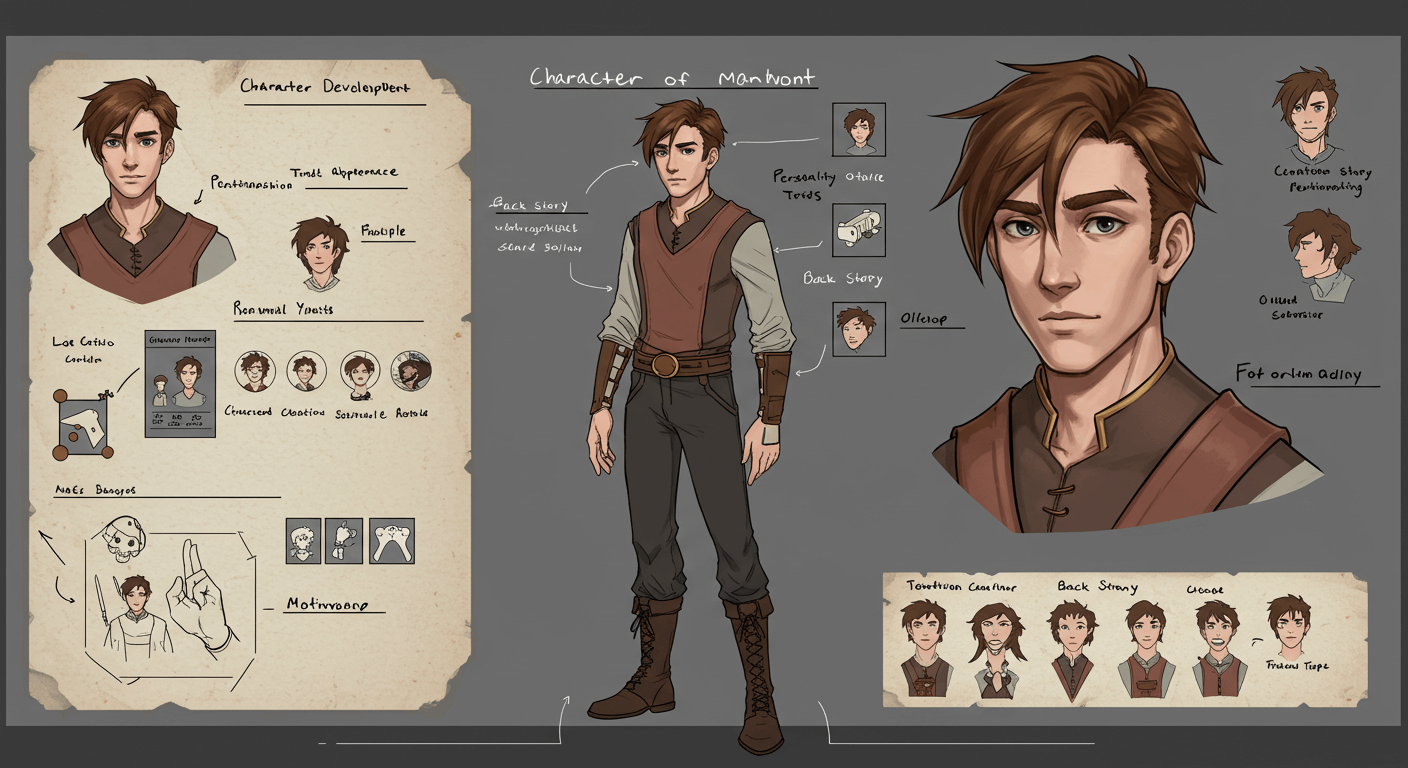
Every compelling novel, every enduring film, and every captivating video game shares a common secret: unforgettable characters. These are the heart and soul of any narrative, the figures readers connect with, cheer for, and remember long after the final page. But how does one breathe life into a mere idea, transforming it into a complex individual with desires, fears, and a compelling journey? From a ghostwriter’s perspective, this process is an intricate blend of research, empathy, and deliberate crafting, building a rich inner world that shapes every outer action.
Creating a truly great character story isn’t about simply listing traits. It’s about understanding the core of who they are, what drives them, and how they change. It’s about building a backstory that informs their present, giving them authentic motivations, and charting an emotional arc that resonates deeply with the audience.
The Spark: Where Character Stories Begin
Just like a novel, a character’s story starts with an initial spark. But how do these unique individuals come to life?
- Observation: The real world is a treasure trove of character inspiration. A quirky habit noticed in a stranger, a strong personality encountered at work, or the way someone reacts under pressure – these observations can be the starting point for a character’s unique traits and behaviors.
- “What If” Questions: This is a powerful tool. What if a quiet librarian secretly harbored a dark past? What if a seemingly strong leader was deeply insecure? What if a character with a great talent faced a crippling fear? These questions open doors to complex personalities.
- Personal Experiences (Transformed): While not directly autobiographical, a writer’s own emotions, struggles, and triumphs can be channeled into a character. How has a moment of betrayal felt? What does true joy look like? Infusing authentic human experience gives characters depth and relatability.
- Existing Archetypes (with a twist): Familiar character types (the hero, the villain, the mentor) can be a useful starting point, but the magic happens when a unique twist is added. What if the wise old mentor had a serious addiction? What if the fearless hero was terrified of heights?
- Dreams and Imagination: Sometimes, the most original character ideas emerge from the subconscious. Paying attention to dreams or allowing free association can lead to unexpected and compelling individuals.
As a ghostwriter, the initial character “spark” often comes from the client. It might be a simple idea (“a strong female detective”) or a detailed character brief. The role then becomes one of a sculptor, taking that initial form and meticulously chiseling away to reveal a fully dimensional being, complete with a past, present, and future.
The Foundation: The Core of a Character
Before writing a single line of dialogue, building a solid foundation for the character is crucial. This is about understanding their essence.
1. The Core Desire: What Do They Truly Want?
Every character wants something, whether they consciously know it or not. This core desire drives their actions and is central to their story.
- External Goal: What do they physically want to achieve in the plot? (e.g., find a treasure, win a race, escape a prison). This is often the plot driver.
- Internal Need: What do they really need on an emotional or psychological level? This is often about growth or healing. (e.g., acceptance, forgiveness, courage, belonging). This often drives their personal arc.
For instance, a character’s external goal might be to find a lost artifact, but their internal need could be to prove their worth to a disapproving parent. The interplay between these two desires creates rich conflict and meaning.
- The Core Wound: What Haunts Them?
Every character carries burdens from their past. The core wound is a past event, trauma, or ongoing belief that deeply affects them.
- Origin: Was it a childhood abandonment, a public failure, a betrayal by a loved one, or a deeply held false belief?
- Impact: How does this wound shape their current personality, fears, and relationships? Does it make them guarded, reckless, or untrusting?
This wound often creates their flaw – a negative trait or belief that holds them back. For example, a character abandoned as a child might struggle with trusting others, leading to isolation. The journey of the story often involves confronting and beginning to heal this wound.
3. Strengths and Weaknesses: The Human Touch
A well-rounded character isn’t perfect. They need a balance of strengths and weaknesses.
- Strengths: What are they good at? What positive qualities do they possess? (e.g., intelligent, compassionate, brave, resourceful). These help them in their journey.
- Weaknesses: What are their shortcomings or vulnerabilities? (e.g., arrogant, impatient, easily manipulated, fearful). These create obstacles and opportunities for growth.
Often, a character’s greatest strength can be tied to their greatest weakness. A character who is fiercely loyal might also be blindly trusting, leading them into danger.
4. The Worldview: How Do They See Things?
A character’s worldview is their unique way of interpreting reality. It’s shaped by their past experiences, beliefs, and values.
- Beliefs: What do they believe about themselves, others, and the world? Are they optimistic or cynical? Do they believe in justice or chaos?
- Values: What do they hold dear? Family, freedom, truth, power? These values dictate their moral compass.
This worldview influences their decisions and reactions throughout the story. A character who believes people are inherently selfish will interact differently than one who believes in universal good.
The Deep Dive: Building a Backstory
A compelling character isn’t just born on page one. Their backstory is the foundation upon which their present actions are built. It’s the sum of their experiences, relationships, and significant events that shaped them into the person they are.
1. Key Life Events: The Milestones
Identify 3-5 pivotal moments in the character’s past that profoundly impacted them. These could be:
- Formative Childhood Experiences: A major loss, an inspiring mentor, a traumatic event, or a significant achievement.
- Teenage Rebellion or Discovery: First love, first heartbreak, a moment of self-discovery, or a major decision.
- Adult Turning Points: A career choice, a personal failure, a major betrayal, or the birth of a child.
These events should directly contribute to their core wound, desires, strengths, or weaknesses.
2. Relationships that Shaped Them: The People in Their Past
No one exists in a vacuum. The people a character has interacted with in their past profoundly influence them.
- Family: What was their relationship with parents, siblings, or guardians like? Was it supportive, abusive, neglectful?
- Friends: Did they have close friends, rivals, or were they isolated?
- Mentors/Enemies: Who taught them valuable lessons, and who caused them significant harm?
Consider how these relationships might echo in their current interactions. For example, a character with a distant parent might struggle to form close bonds as an adult.
3. Skills and Knowledge: What Did They Learn?
The backstory also accounts for a character’s practical abilities and intellectual understanding.
- Acquired Skills: Did they learn to fight, code, cook, or negotiate? Where and how did they gain these skills?
- Knowledge Base: Are they experts in history, science, or human psychology? How did they acquire this knowledge?
These skills and knowledge should be relevant to their role in the story and provide believable reasons for their capabilities.
4. Secrets and Lies: What Do They Hide?
Secrets add depth and tension. Every character might have something they are hiding, from others or even from themselves.
- Personal Secrets: A past mistake, a hidden identity, or a forbidden love.
- Societal Secrets: Knowledge of a conspiracy, involvement in a forbidden organization, or a breaking of societal rules.
These secrets can create internal conflict and drive specific plot points when they are revealed or threatened.
The Arc: How They Change
A character who remains exactly the same from beginning to end is rarely interesting. A compelling character undergoes an arc, a journey of transformation.
1. The Starting Point: The Lie They Believe
At the beginning of the story, the character often operates under a false belief or a “lie” about themselves or the world, usually stemming from their core wound. This lie prevents them from achieving their internal need.
- Example: A character who suffered public humiliation might believe “I am worthless and cannot trust anyone.”
2. The Inciting Incident: The Call to Change
A significant event forces the character out of their comfortable (or uncomfortable) routine. This inciting incident presents them with a challenge that their current “lie” cannot solve.
3. Rising Action: Tests and Challenges
As the plot progresses, the character faces a series of escalating challenges. These tests force them to confront their flaws and their false belief. They might try to solve problems using their old ways, only to fail.
4. The Midpoint: The Point of No Return
At the story’s midpoint, the character often has a moment of realization or a significant shift in perspective. They might gain new information or experience a powerful emotional event that pushes them closer to challenging their lie. They commit fully to their journey.
5. The All Is Lost Moment: The Darkest Hour
Just before the climax, the character experiences their lowest point. Their false belief seems confirmed, and all hope appears lost. This is where they are truly tested.
6. The Climax: Embracing the Truth
In the climax, the character faces their greatest challenge. Here, they must reject their old lie and embrace a new truth about themselves or the world. This is where their internal need is met, or they learn a crucial lesson.
- Example: The character from before might realize “I am worthy of love, and trust is a risk worth taking.”
7. Resolution: The New Self
The resolution shows the character in their “new normal,” demonstrating how they have changed. They are a different person, having grown and learned through their journey. This new self allows them to face the world in a fundamentally altered way.
The Ghostwriter’s Perspective: Breathing Life into Characters
For a ghostwriter, creating a character’s story is a profound act of empathy and imaginative construction.
- Listening to the Unspoken: Often, clients have a vague idea of a character, but the ghostwriter must ask the right questions to uncover the deeper layers. What scares them? What do they regret? What secret shame do they carry? These are the questions that unlock authenticity.
- Filling the Gaps: A client might provide bullet points, but a ghostwriter builds the narrative tissue around them. This involves imagining specific scenes from the character’s past, detailing their daily routines, and exploring how they interact with their environment.
- Ensuring Consistency: A well-developed character remains consistent in their core personality and motivations, even as they evolve. The ghostwriter ensures that actions and reactions are true to the character’s established traits and backstory.
- Crafting Authentic Voice: Every character should sound unique. A ghostwriter develops distinct dialogue patterns, vocabularies, and internal monologues that reflect the character’s background, education, and personality.
- Balancing Internal and External: A character’s story isn’t just about what happens to them (external plot) but how those events affect their inner world (internal arc). A ghostwriter ensures both are interwoven seamlessly, with internal struggles driving external actions and vice-versa.
- Problem-Solving Character Obstacles: If a character feels flat or unbelievable, a ghostwriter diagnoses the issue. Perhaps their motivations aren’t strong enough, their flaws aren’t compelling, or their arc is unclear. Solutions might involve deepening their wound, adding a new supporting relationship, or giving them a more challenging internal conflict.
Bringing Characters to Life: Practical Tips
Beyond the structural elements, some practical steps can help bring a character’s story to vivid life:
- Character Interviews: Imagine sitting down with your character and asking them questions. What’s their favorite food? What’s their biggest regret? What do they dream about?
- “Day in the Life” Exercise: Write a short scene depicting a typical day for your character before the main story begins. This helps solidify their routines, habits, and interactions.
- Explore Contrasting Traits: Give your character unexpected contradictions. A tough warrior who secretly loves poetry, or a shy person with an explosive temper. These contradictions make them more human and intriguing.
- Show, Don’t Tell: Instead of stating “she was brave,” show her acting bravely in a frightening situation. Instead of saying “he was insecure,” show him fidgeting and avoiding eye contact.
- Use Sensory Details: How does your character experience the world? What do they see, hear, smell, taste, and feel? What are their comfort items, or things that trigger bad memories?
Conclusion: The Enduring Power of Story
Creating a story for a character is an act of profound empathy and careful construction. It involves delving into their past, understanding their present struggles, and mapping their journey of transformation. From the subtle nuances of their worldview to the seismic shifts of their personal arc, every detail contributes to a living, breathing individual.
Whether building these characters for one’s own novel or crafting them as a ghostwriter for another’s vision, the reward lies in the enduring power of a well-told story. It is through these authentic, relatable, and evolving characters that audiences truly connect, experiencing the triumphs and tribulations as if they were their own. The journey of character creation is an exploration of the human condition itself, offering a mirror for readers to see aspects of themselves reflected, ultimately making the fictional real. So, what lives will you create? What stories will they tell? The endless possibilities of character await.