

So, you’ve poured your heart and soul into writing your book, you’ve meticulously edited it, and perhaps even designed a stunning cover. Now you’re standing on the precipice of publication, and a tiny, yet mighty, detail emerges: the ISBN number. Many new authors wonder, “What is an ISBN, and how do I get one?” It’s a key identifier in the publishing world, essential for your book’s journey from manuscript to marketplace. Don’t worry, navigating this step is more straightforward than it seems, and understanding its importance will empower you in your publishing decisions.
What Exactly is an ISBN, and Why Do You Need One?
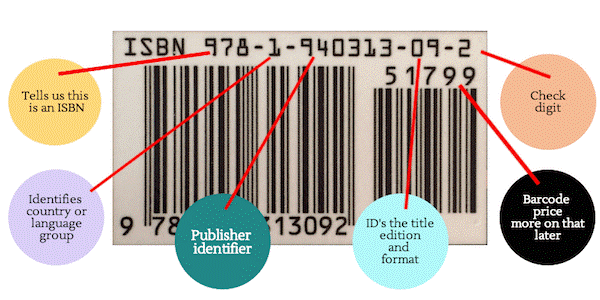
An ISBN (International Standard Book Number) is a unique commercial book identifier barcode. Think of it as your book’s unique fingerprint, a 13-digit number (since 2007) that identifies a specific edition of a specific book by a specific publisher. This universal number helps booksellers, libraries, wholesalers, and distributors worldwide track and order books efficiently.
Here’s why having an ISBN is so important for your book:
- Discoverability: Without an ISBN, your book won’t be easily found or ordered through major bookselling channels like Amazon, Barnes & Noble, or independent bookstores. It’s the standard industry identifier that connects your book to global databases.
- Retail Presence: Most legitimate booksellers and online retailers require an ISBN to list and sell your book. It allows them to manage inventory and sales data accurately, ensuring your book can be purchased wherever books are sold.
- Library Systems: If you aspire for your book to be available in libraries, an ISBN is generally a requirement for them to catalog, process, and loan it out to their patrons.
- Tracking and Data: Publishers, distributors, and even you, as an author, can use the ISBN to track sales data and performance across different markets, providing valuable insights into your book’s reach.
- Professionalism: An ISBN signals to the industry and readers that your book is a professionally published work, adhering to global standards and establishing your credibility as a legitimate publisher (even if that publisher is you!).
It’s crucial to understand that a new ISBN is typically required for each different format or edition of your book. For example, your paperback, hardcover, e-book (EPUB), and audiobook versions would each need their own unique ISBN. A revised edition with significant changes would also warrant a new ISBN.
Step 1: Identifying Your Official ISBN Agency
The very first step is to locate and connect with the designated national ISBN agency for your country. These agencies are the only legitimate source for purchasing or receiving ISBNs directly. Obtaining an ISBN from an unofficial source can lead to issues with discoverability or misidentification of your publisher.
- For Authors in the United States: Bowker. If you are based in the United States, Bowker (specifically MyIdentifiers.com) is the sole official ISBN agency. You must purchase ISBNs directly from them.
- For Authors in the United Kingdom and Ireland: Nielsen UK ISBN Agency. If you’re publishing from the United Kingdom or Ireland, the Nielsen UK ISBN Agency is your official provider.
- For Authors in Canada: Library and Archives Canada (Free!). Authors based in Canada have a significant advantage: Library and Archives Canada provides ISBNs free of charge as part of a government service.
- For Authors in Other Countries: The International ISBN Agency Website. For authors outside the US, UK, Ireland, and Canada, you’ll need to find your country’s specific ISBN agency. The International ISBN Agency maintains a comprehensive and up-to-date list of all national agencies worldwide. Simply visit their official website and navigate to the “ISBN Agencies” section to find your local provider.
Step 2: Purchasing Your ISBNs (or Applying for Free Ones)
Once you’ve identified your national agency, the next step involves acquiring the ISBNs themselves.
For Paid Agencies (e.g., Bowker, Nielsen):
-
- You’ll visit their respective websites and create an account.
- Navigate to the “Buy ISBNs” or similar section.
- You’ll typically have options to purchase single ISBNs or blocks of ISBNs (e.g., 1, 10, 100, 1000). While a single ISBN might cost around $125 (U.S. Bowker pricing as of 2025, subject to change), purchasing a block of 10 for $300 or 100 for $575 significantly reduces the per-ISBN cost. If you anticipate publishing multiple books or various formats, buying a block is much more economical.
- Complete the secure online transaction. Once purchased, your ISBNs are usually immediately available in your account dashboard.
For Free Agencies (e.g., Library and Archives Canada):
-
- You’ll visit their official website and locate the ISBN application section.
- The process involves filling out an online form with details about your upcoming publication.
- Once your application is reviewed and approved, the ISBNs will be assigned to you at no cost.
Step 3: Defining Your Publisher Identity for the ISBN
When you acquire an ISBN, you’ll be asked to provide publisher information. This is a crucial detail, especially for self-published authors.
- You Are the Publisher: If you are self-publishing, you are the publisher. You have the flexibility to use your own personal name, create a unique imprint name (e.g., “Maple Tree Press,” “Your Name Publishing”), or use your legally registered company name if you have one.
- Consistency is Key: The most important rule here is consistency. Once you choose a publisher name for an ISBN and assign it to a book, that name is permanently linked to that ISBN and book. Ensure the name you choose is professional and one you wish to use for all future ISBNs under that imprint.
- Avoiding Aggregator ISBNs (Publisher Name Control): Some self-publishing platforms (like KDP Print or IngramSpark) offer “free” ISBNs as part of their services. While convenient, be aware of the significant catch:
- They list their company as the publisher for that ISBN, not your chosen imprint. This means your book’s official publisher record will be “KDP” or “IngramSpark,” which can subtly affect your branding and, in some cases, limit your control over distribution channels or how booksellers perceive your independent status.
- For maximum control and to build your own professional author brand, it is widely recommended that self-publishers purchase their own ISBNs directly from their national agency. This ensures you are listed as the publisher, retaining full ownership and brand consistency.
Step 4: The Assignment Process: Linking Your ISBN to Your Book’s Metadata
Once you’ve secured your ISBNs from the official agency, the final and critical step is to assign them to your book’s metadata. This is done within your account on the ISBN agency’s website (e.g., Bowker’s MyIdentifiers.com). This metadata is the essential descriptive information that booksellers, libraries, and distributors use to identify, categorize, and sell your book.
You will typically be prompted to enter comprehensive details about your book, which will be permanently associated with that ISBN:
- Book Title: The exact title of your book.
- Author Name(s): The full name(s) of the author(s) or editor(s).
- Publisher Name: Your chosen imprint or publisher name.
- Format: Specify the exact format (e.g., Paperback, Hardcover, EPUB eBook, MOBI eBook for Kindle, Audiobook). Remember, each format needs its own ISBN.
- Publication Date: The intended date your book will be released.
- Binding Type: (For print books) e.g., perfect bound, case laminate.
- Page Count: The total number of pages in this specific edition.
- Language: The primary language of your book.
- Description/Blurb: A short summary of your book.
- Subject Categories: Often using industry standards like BISAC codes to help categorize your book for retailers and libraries.
This meticulous entry of metadata makes your book thoroughly searchable and uniquely identifiable across the entire global book supply chain. Remember to assign a new ISBN for each distinct format and for any new edition that involves significant content changes, as this ensures accurate tracking and avoids confusion in the marketplace.
Understanding the EAN Barcode: Your ISBN’s Visual Counterpart
While your ISBN is the numerical identifier, the EAN (European Article Number) barcode is its visual representation, primarily used for physical books. This is the striped pattern you see on the back cover of almost every book.
- What it is: The ISBN-13 is designed to be compatible with the EAN-13 barcode system. Most book barcodes begin with “978” or “979,” which is a special “Bookland” prefix within the EAN system, identifying the product as a book.
- Why you need it: For print books, this barcode is essential for point-of-sale systems in bookstores and for inventory management in warehouses. It allows a quick scan to retrieve all the book’s information linked to its ISBN.
- How to get it:
- When you purchase an ISBN from agencies like Bowker, they often offer barcode images as an add-on or a separate purchase.
- Many book cover designers or printers can also generate the EAN barcode for your ISBN as part of their service.
- There are also online barcode generators (some free, some paid) where you input your ISBN, and they create the image file for you.
Beyond the ISBN: Other Important Identifiers and Registrations
While the ISBN is crucial for discoverability and sales, there are other identifiers and registrations you might consider, depending on your goals and location.
Copyright Registration: Protecting Your Work
Copyright protection for your original work generally exists the moment you create it and fix it in a tangible form (e.g., writing it down). However, formal registration offers significant additional legal benefits.
- Why register? In many countries (like the U.S.), registering your copyright with the national copyright office creates a public record of your ownership. This is often a prerequisite for filing a copyright infringement lawsuit and can entitle you to statutory damages and attorney’s fees if your copyright is violated.
- How to register: The process and fees vary by country. For U.S. authors, you’d register with the U.S. Copyright Office (Copyright.gov). It’s typically an online process involving filling out forms and submitting a copy of your work.
Library of Congress Control Number (LCCN): For Library Presence
The Library of Congress Control Number (LCCN) is a unique identification number assigned by the Library of Congress to the catalog record created for each book in its collections. It helps librarians locate specific records in national databases.
- Is it necessary? An LCCN is distinct from an ISBN and is primarily relevant for authors aiming to get their books into U.S. libraries. It is not required for selling books in general retail.
- How to get it: For U.S. publishers and self-published authors, you can apply for a Preassigned Control Number (PCN) through the Library of Congress’s PrePub Book Link program. There is no fee to apply, but you are generally required to send a copy of your published book to the Library of Congress once it’s released.
- Source: Library of Congress PCN Program
After the ISBN: Where to Distribute Your Book
Once your book has its unique ISBN (and possibly other identifiers), the next monumental step is getting it into the hands of readers. Your ISBN is the key that unlocks various distribution channels.
- Print-on-Demand (POD) Services: Platforms like IngramSpark and Amazon Kindle Direct Publishing (KDP) Print are popular choices. You upload your manuscript and cover, and they print copies only when an order is placed. Your ISBN allows them to distribute your book to their networks, which include major online retailers and often physical bookstores (via IngramSpark).
- Ebook Aggregators: Services like Draft2Digital or PublishDrive allow you to upload your ebook manuscript once, and they distribute it to multiple major ebook retailers (Apple Books, Kobo, Barnes & Noble Nook, Google Play Books) using your ISBN. KDP also allows direct ebook publishing to Amazon’s Kindle ecosystem.
- Direct Sales: Your ISBN won’t prevent you from selling directly to readers from your own website or at author events. In fact, using your own ISBN for these direct sales maintains your brand identity.
- Traditional Distribution (Less Common for Self-Publishers): Securing a traditional distributor (companies that stock and ship your books to bookstores) is more challenging for self-published authors and usually requires a substantial catalog of books or a publishing deal. However, some larger self-publishing services might offer avenues here.
Having your ISBN ready streamlines the entire distribution process, ensuring your book is properly cataloged and available across the vast global marketplace, ready to find its readers.
Getting an ISBN number is a fundamental part of becoming a professionally published author. While it might seem like just a string of numbers, it’s your book’s passport to the world’s bookshelves and digital marketplaces. By acquiring your own ISBNs from the correct national agency and carefully assigning its metadata, you ensure maximum control, professional branding, and broad discoverability for your literary creation. Happy publishing!
From concept to ISBN, Professional Ghostwriter handles it all.
Skip the hassle of navigating publishing specifics. We streamline your book’s journey, securing its official ISBN as part of our expert ghostwriting and publishing support. Discover your easy path to becoming a published author.