
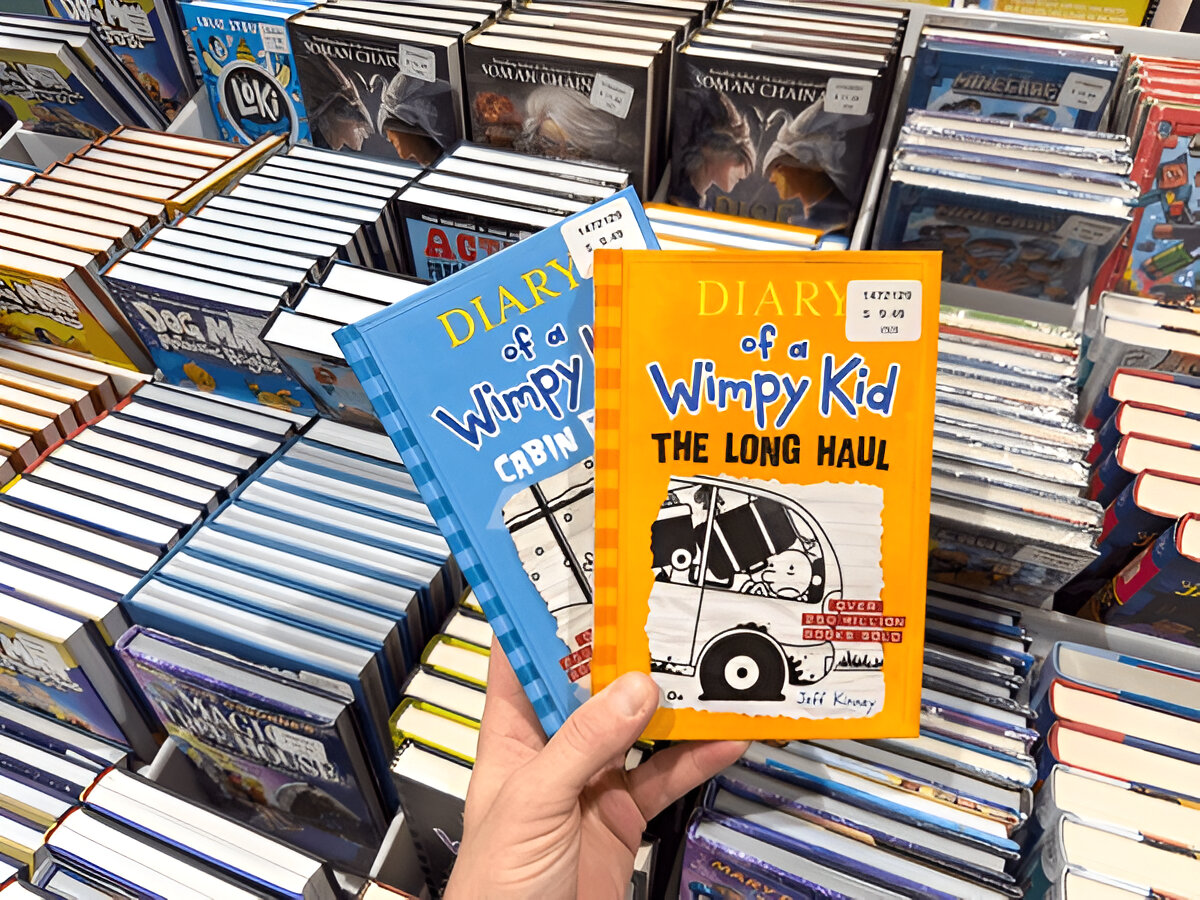
“Diary of a Wimpy Kid” by Jeff Kinney redefined children’s literature, blending text with simple illustrations to create a unique and highly engaging reading experience. These books resonate deeply with middle-grade readers because they perfectly capture the awkward, often hilarious, and sometimes frustrating reality of growing up. If you’re inspired to write a book that combines humor, relatable struggles, and a distinctive visual style, you’re tapping into a formula that has captivated millions.
Before we get to the writing, let’s understand the essence of this global phenomenon.
What Exactly Is a “Wimpy Kid”?
At its core, “Diary of a Wimpy Kid” introduces us to Greg Heffley, an average middle schooler navigating the chaotic world of adolescence. He’s not a hero in the traditional sense; in fact, he’s often self-centered, a bit lazy, and frequently schemes to gain popularity or avoid responsibility. He’s often unlucky, landing in embarrassing situations despite his best efforts (or lack thereof).
A “Wimpy Kid” embodies the everyday struggles of a typical middle-grade child: dealing with embarrassing parents, annoying siblings, social hierarchies at school, fleeting friendships, and the constant, often misguided, quest for popularity. He’s an every-kid, making him instantly relatable, despite (or perhaps because of) his flaws.
Why Do Authors Want to Write Like “Wimpy Kid”?
The appeal of emulating the “Wimpy Kid” style for authors is clear: it’s a proven blueprint for success and engagement.
Firstly, the unique format breaks away from traditional prose, making it less intimidating and highly appealing to young readers, including those who might be reluctant readers. This visual-text hybrid offers a fresh storytelling approach.
Secondly, the books’ massive popularity speaks volumes. Authors see the immense audience connection and the consistent sales across a long-running series. It demonstrates that stories focusing on relatable, everyday problems, infused with humor, can achieve global success.
Finally, the style offers a certain creative freedom. While challenging to execute well, the episodic nature and simple illustrations can feel less daunting than writing a dense, purely text-based novel, making it an attractive entry point for some aspiring authors.
What Makes “Diary of a Wimpy Kid” So Interesting?
The secret sauce of “Diary of a Wimpy Kid” lies in its masterful blend of elements that make it an irresistible read for its target audience.
Unflinching Relatability: Readers instantly connect with Greg’s awkward social dilemmas, family squabbles, and school woes. It mirrors their own lives, making them feel seen and understood. The situations, though exaggerated for humor, feel authentically middle school.
The Power of Humor: The books are genuinely funny. The humor stems from Greg’s flawed perspective, the absurdity of everyday life, and the comical situations he often finds himself in (or creates). It’s a lighthearted, observational comedy that resonates without being preachy.
The Visual Storytelling: The integrated illustrations are more than just pictures; they are an essential part of the narrative. They deliver punchlines, show character reactions, clarify events, and provide a visual break that enhances readability. This unique format makes the books fly by, even for those who typically struggle with reading.
Authentic Voice: Greg’s first-person narrative voice feels incredibly authentic to his age. He’s witty, slightly cynical, and speaks directly to the reader, creating an intimate connection. This distinct voice is key to the series’ charm.
Ready to capture that “Wimpy Kid” magic? Here’s your step-by-step guide to crafting your own book in this distinctive style.
9 Steps To Write Similar To “Diary Of A Wimpy Kid”
1. Embrace the Diary/Journal Format
The core of “Diary of a Wimpy Kid” is right in its title: it’s a diary. This format is crucial and dictates much of the book’s feel and structure.
Your story should be presented as if written by the protagonist themselves, using first-person narration. Use dates or sequential entries to mark the passage of time, even if just for a few days or weeks per entry. This makes the book feel personal and immediate.
The physical appearance matters too. Think about a handwritten-style font (like the one Kinney uses) to enhance the illusion of a real diary. This instantly sets a casual, intimate tone.
2. Craft a Relatable Middle-Grade Protagonist
Your protagonist should be equally compelling and, most importantly, relatable to your target audience (ages 8-12, often stretching to 14).
Your character doesn’t have to be perfect; in fact, flaws are essential. Give your protagonist realistic insecurities, desires, and the everyday struggles that middle schoolers face.
They should navigate common scenarios: annoying siblings, clueless parents, school bullies, friendship dramas, and the constant quest for popularity or simply fitting in. Readers should see themselves, or their friends, in your main character.
3. Master the Authentic, Humorous Voice
The “Wimpy Kid” voice is distinctive: slightly cynical, observational, often self-deprecating (even if unintentionally so), and always humorous.
Your protagonist’s voice needs to sound like a genuine middle schooler talking, not an adult pretending to be one. Use language that feels natural for the age group, but avoid overly trendy slang that will quickly date your book.
The humor should stem from relatable situations and the protagonist’s unique perspective on them. Think about exaggeration, irony, awkward social moments, and minor misfortunes blown out of proportion. Let the humor be lighthearted, even when dealing with frustrating situations.
4. Integrate Simple, Informative Illustrations
The doodles are not just decorative; they are integral to the storytelling. They often convey humor, emotion, or plot points that the text alone might not.
Your illustrations don’t need to be complex works of art. The “Wimpy Kid” style is deliberately simple, almost stick-figure-like. This makes them quick to draw and keeps the focus on the narrative.
The key is to use illustrations to enhance the text, not just repeat it. Sometimes the drawing will deliver the punchline, other times it will show an an event the protagonist is describing, or visually represent a thought or emotion. Think of them as an extension of the protagonist’s mind and observations.
5. Develop an Episodic, Vignette-Driven Structure
Unlike novels with a single, overarching plot, “Wimpy Kid” books are more episodic. They follow the protagonist through a series of interconnected, humorous vignettes, usually over a school year or a summer vacation.
Each chapter or entry might focus on a different mini-adventure or problem. While there might be a loose through-line (like trying to become popular or survive middle school), the real joy is in the day-to-day mishaps.
This episodic structure makes the books very digestible and highly re-readable. Readers can pick them up and put them down easily, finding entertainment in short bursts.
6. Focus on Relatable Middle School Experiences
The universal appeal of “Wimpy Kid” comes from its accurate portrayal of the middle school experience.
Think about the everyday scenarios: navigating school hallways, dealing with class projects, sports tryouts, cafeteria politics, sleepovers, family road trips, summer camps, dealing with siblings, and attempts to impress peers.
These are the moments that truly resonate with young readers. They see their own lives, fears, and triumphs reflected in the pages, which creates a strong connection to the story.
7. Balance Text and Visuals
The ratio of text to illustrations is crucial. The books are designed to be a quick, non-intimidating read, especially for reluctant readers.
Pages are rarely dense with text. There’s plenty of white space. Short paragraphs, often just a few sentences, are interspersed with illustrations. This visual break makes the reading experience less daunting and more engaging.
Experiment with how your text and drawings interact. Do they always appear together? Does an illustration sometimes take up a whole page, conveying a moment without words? This dynamic interplay is a hallmark of the style.
8. Infuse Humor Through Character and Situation
The humor in “Wimpy Kid” rarely comes from complex jokes. Instead, it’s rooted in character-driven situations and the protagonist’s often flawed reactions.
Embrace situational comedy: the protagonist trying to avoid an embarrassing situation, or dealing with an unappetizing school lunch. Use exaggeration: a small inconvenience becomes a monumental disaster in your character’s eyes. Employ irony: your character’s attempts to be cool almost always backfire.
Let the humor naturally arise from the characters’ personalities and the everyday absurdities of their lives. It should feel organic, not forced.
9. Revise for Pace and Punchlines
Even simple books like “Wimpy Kid” undergo rigorous revision. The humor needs to land, and the pacing must be just right.
Read your manuscript aloud. Does the dialogue sound authentic? Do the jokes hit? Are there any parts that drag? Because the entries are short, every word counts.
Get feedback from your target audience. Do they find it funny? Do they relate to the characters and situations? Their honest reactions will be invaluable in refining your book to truly capture that middle-grade magic.
Conslusion
Writing a book like “Diary of a Wimpy Kid” is about more than just drawing stick figures. It’s about capturing the authentic voice and experiences of a middle-grade protagonist, blending humor with relatable struggles, and delivering it all in an engaging, visually dynamic format. Embrace the awkwardness, the everyday adventures, and the unique perspective of your protagonist, and you might just create the next beloved series for young readers.