
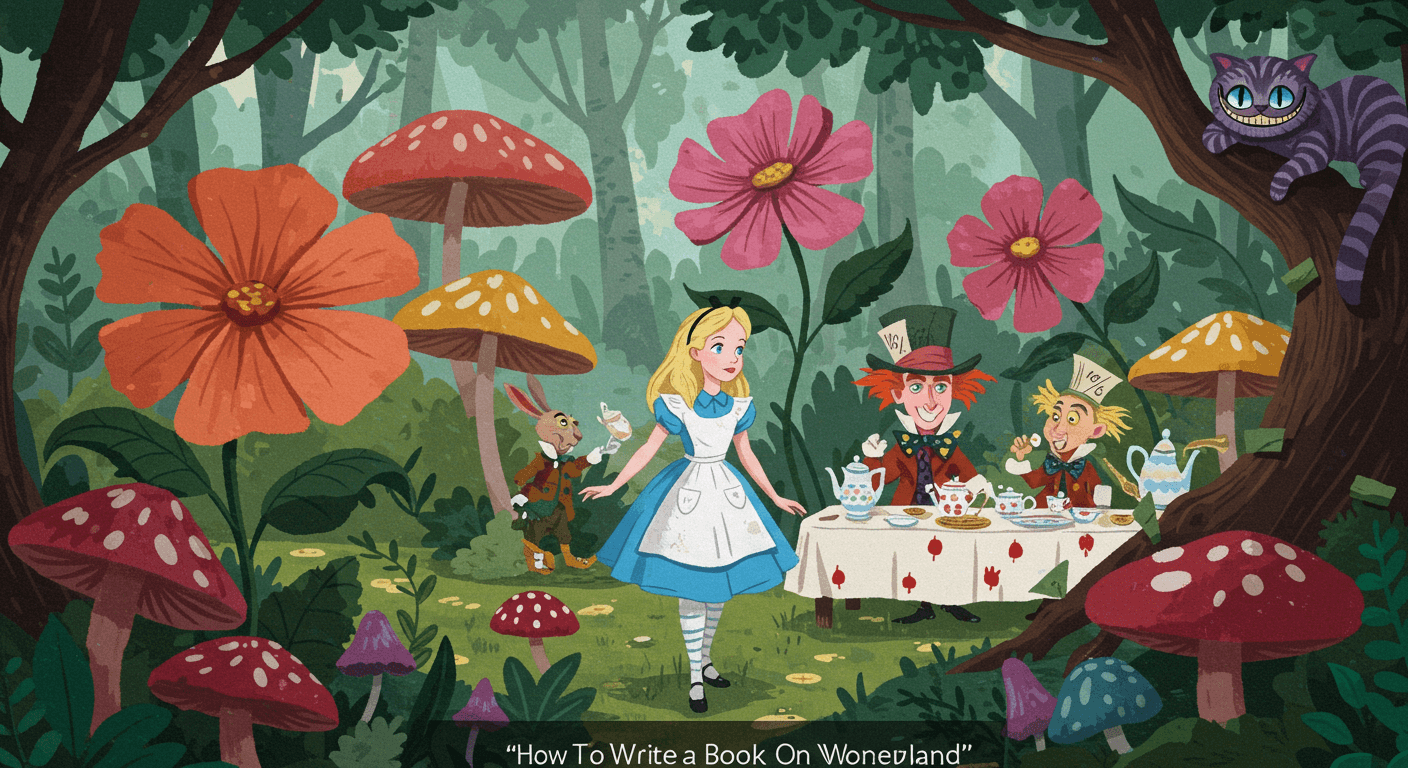
Step into the whimsical, nonsensical, and utterly captivating world of Lewis Carroll’s Alice’s Adventures in Wonderland. It’s a book that has charmed, puzzled, and delighted readers for over 150 years. But how do you write a review about a book that defies logic and embraces the absurd?
Reviewing a classic like Alice in Wonderland is a fantastic exercise in critical thinking. It challenges you to look beyond the surface silliness and explore the deeper layers (or delightful lack thereof!). This guide will walk you through exactly how to craft a compelling review of this timeless fairytale.
Why is Alice in Wonderland So Tricky (and Fun!) to Review?
Alice isn’t your average story. Here’s why it requires a slightly different approach:
- Nonsense as a Feature: Its very essence is illogical. You can’t critique plot holes in a story where a rabbit checks a watch and a cat grin. You have to appreciate the purpose of the nonsense.
- Layered Interpretations: People have debated its meaning for ages. Is it a satire? A psychological journey? A child’s pure imagination? You can touch on these, but don’t feel obligated to solve the mystery.
- Iconic Characters: The Mad Hatter, Cheshire Cat, Queen of Hearts – they’re larger than life. Your review should reflect their impact.
- Timeless Appeal: It still resonates. Why? That’s a great question to explore.
Step-by-Step: Crafting Your Alice Review
Ready to tumble down the rabbit hole of literary analysis? Let’s go!
Step 1: Re-Read and Re-Engage (Actively!)
You might have read Alice as a child, but re-reading it now, with a reviewer’s eye, is crucial.
- Take Notes: Keep a notebook. Jot down lines that make you laugh, famous quotes, confusing bits, and any patterns you notice.
- Focus on Your Experience: How does it make you feel now? Does it spark nostalgia, bewilderment, or something else entirely?
- Pay Attention to Detail: Notice the wordplay, the riddles, and the subtle (or not-so-subtle) jabs at Victorian society.
Step 2: Set the Stage: Introduction & Basic Info
Start strong, hooking your reader into the unique world of Alice.
- Hook: Begin with a captivating sentence that captures the book’s essence. Something like: “Prepare to abandon all logic and embrace the delightfully absurd…” or “Few books have left such an indelible mark on popular culture as Lewis Carroll’s timeless masterpiece…”
- Title & Author: Clearly state Alice’s Adventures in Wonderland by Lewis Carroll (pen name of Charles Lutwidge Dodgson).
- Genre & Context: Mention it’s a classic work of fantasy, children’s literature (though enjoyed by all ages), and literary nonsense. You might briefly note its Victorian origins.
- Your Overall Impression: Give your reader a concise idea of your main take on the book. Is it a whimsical delight? A philosophical puzzle?
Step 3: The (Brief & Spoiler-Free) Journey Summary
You need to provide enough plot so a new reader understands the premise, but without ruining the “adventure” for them.
- The Setup: Introduce Alice and her initial boredom, leading to her following the White Rabbit.
- The Tumble: Describe her fall down the rabbit hole into Wonderland.
- Key Encounters (Tease, Don’t Detail): Mention some of the iconic characters she meets (e.g., the Mad Hatter, Cheshire Cat, Queen of Hearts) and the general sense of absurdity and shifting logic.
- No Spoilers! Crucially, do not reveal how Alice gets out of Wonderland or any specific conclusions of her encounters. The fun is in the journey!
Step 4: Delve into the Wonderland Characters
This is where Alice truly shines. Each character is a rich subject for analysis.
- Alice: How does she react to the madness? Is she curious, frustrated, adaptable? Does she try to impose logic on an illogical world? Does she change by the end?
- The Mad Hatter & March Hare: Discuss their iconic tea party. What does their dialogue reveal about the nature of time or social conventions?
- The Cheshire Cat: Analyze his philosophical riddles, his ability to appear and disappear, and his role in guiding/confusing Alice.
- The Queen of Hearts: Discuss her tyrannical nature and obsession with “Off with their heads!”
- Show, Don’t Just Tell: Instead of “The Queen was mean,” write: “The Queen of Hearts, with her constant cry of ‘Off with their heads!’, serves as a terrifying, yet comically exaggerated, symbol of arbitrary power and injustice.” Provide a brief example of her behavior if possible.
Step 5: Analyze the Core Themes & Symbolism
Beyond the chaos, Alice touches on intriguing ideas.
- Nonsense & Logic: How does the book play with reality and unreality? Is it simply silly, or does the nonsense highlight the arbitrary rules of our own world?
- Childhood vs. Adulthood: Does Wonderland reflect the confusing transition from childhood innocence to the arbitrary rules of adulthood? Alice’s frustration with the “lessons” she encounters is a good point here.
- Identity: Alice constantly questions who she is, changing sizes and trying to make sense of her new reality. How does the book explore the fluidity of identity?
- Authority & Rules: The arbitrary rules of Wonderland, especially those enforced by the Queen, can be seen as a commentary on power and justice.
- Wordplay & Language: Carroll, a mathematician, loved word games, puns, and riddles. How does this linguistic playfulness contribute to the book’s charm and its themes?
Step 6: Evaluate the Writing Style and Tone
Carroll’s writing is unique and central to the book’s appeal.
- Whimsical & Playful: Describe the language as imaginative, inventive, and full of wordplay, puns, and riddles.
- Descriptive: Does Carroll create vivid images of the bizarre characters and landscapes?
- Tone: How does the tone shift? Is it consistently lighthearted, or are there moments of genuine menace or frustration?
- Influence: You might briefly touch on how Carroll’s style influenced later writers or even pop culture.
Step 7: Pacing & Structure (The Anti-Plot Analysis!)
Unlike many books, Alice doesn’t have a traditional plot arc, and that’s often its strength.
- Episodic Nature: Note that the story is a series of encounters rather than a tightly plotted narrative with escalating tension and a single goal.
- Dream-like Flow: Describe how the events unfold like a dream, with sudden shifts, illogical transitions, and a lack of clear cause and effect.
- Does it Work? Discuss whether this episodic, dream-like structure enhances the experience or, for some readers, makes it difficult to follow.
Step 8: Discuss Its Lasting Impact & Cultural Significance
Alice is more than just a book; it’s a phenomenon.
- Pop Culture Presence: How has Alice permeated movies, TV shows, music, art, and even common phrases (“down the rabbit hole,” “Mad as a Hatter”)?
- Influence on Other Works: Has it inspired other authors, artists, or filmmakers?
- Timeless Appeal: Why do readers, young and old, continue to be drawn to this story after so many decades? Is it the escape, the humor, the underlying themes?
Step 9: Craft Your Conclusion and Recommendation
Bring your analysis to a satisfying close.
- Summarize Your Main Points: Briefly reiterate your overall thoughts on the book’s strengths and its unique qualities.
- Who is it For?: Who would you recommend Alice in Wonderland to? (e.g., “Readers who enjoy imaginative journeys,” “Those who appreciate wordplay,” “Anyone looking for a break from logic,” “Families seeking a timeless tale to share”).
- Final Verdict: End with a strong, memorable statement that encapsulates your final impression of the book’s enduring magic.
Step 10: Review, Refine, and Polish Your Wonderland Wisdom!
Don’t submit your first draft!
- Read Aloud: Catch awkward sentences and ensure your review flows well.
- Check for Specifics: Did you use enough examples from the book to support your points?
- Clarity and Conciseness: Is every sentence necessary? Is your language clear and engaging?
- No Spoilers (Again!): Double-check!
- Proofread: Typos, grammar errors, and punctuation mistakes detract from even the best insights.
Reviewing Alice’s Adventures in Wonderland is a unique literary adventure in itself. By focusing on its distinctive characters, playful use of nonsense, timeless themes, and enduring cultural impact, you can craft a review that’s as engaging and thought-provoking as the book itself.