
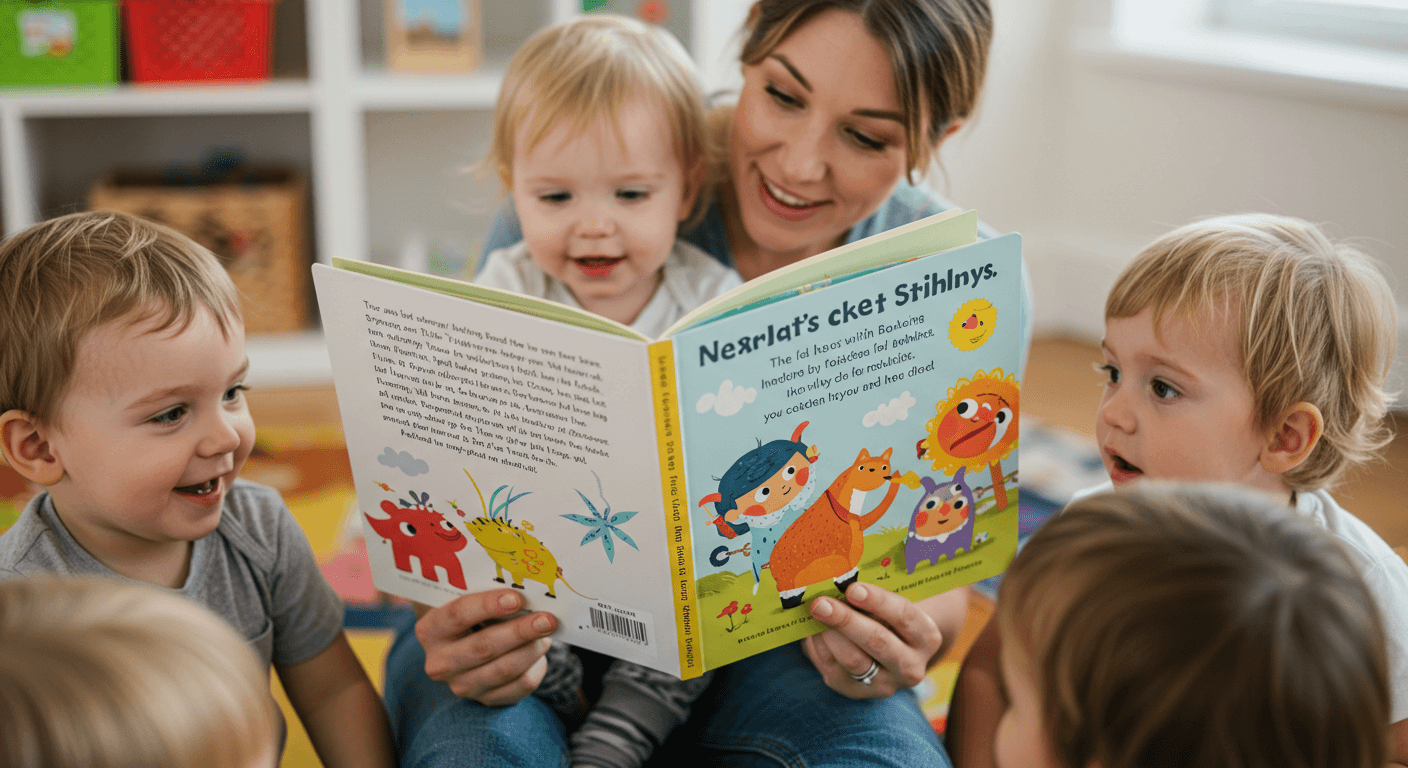
Have you ever watched a toddler completely captivated by a picture book? Their eyes wide, their little fingers pointing, sometimes even mimicking sounds or trying to turn the sturdy pages themselves. It’s a magical moment, and it highlights the incredible power of books in these early, formative years.
If you dream of creating those magical moments, writing for toddlers (roughly ages 0-3) is a truly special endeavor. It’s not about complex plots or deep characters; it’s about simplicity, sensory experience, and pure joy.
While it might seem “easy” because of the low word count, writing for toddlers is actually a sophisticated art form. Every word, every illustration, has to earn its place. But don’t be intimidated! With the right approach, you can craft a delightful book that tiny hands will reach for again and again.
Understanding Your Audience: The Toddler Brain
Before you write a single word, get inside a toddler’s head. What are they experiencing?
- Learning Machines: They’re absorbing language, concepts (colors, shapes, numbers), and emotions at an incredible rate.
- Sensory Focused: They learn through touch, sight, sound, and even taste. Bright colors, clear sounds, and engaging textures are key.
- Short Attention Spans: Seriously short. They need immediate engagement and quick payoffs.
- Repetition is Comforting: They love predictability and repetition. It helps them learn and feel secure.
- Egocentric: The world revolves around them. Stories often focus on familiar experiences (bedtime, food, play).
- Developing Language: They’re building vocabulary and understanding simple sentence structures.
- Emotionally Driven: They respond to clear, relatable emotions (happy, sad, silly).
Knowing this, you’ll understand why simplicity and engagement are your superpowers.
The Essentials: Key Elements of a Toddler Book
Every successful toddler book usually nails these points:
- Extreme Simplicity: Short, clear sentences. One core concept or idea per page/spread.
- Repetition: Recurring words, phrases, or actions.
- Sensory Engagement: Opportunities for touch-and-feel, lift-the-flaps, or bright, distinct visuals.
- Clear Concept/Theme: Colors, animals, sounds, emotions, daily routines.
- Relatable Experiences: Things toddlers do every day.
- Positive & Upbeat Tone: Books should be comforting and fun.
- Strong Read-Aloud Quality: Simple rhythm and rhyme often work well.
- Illustrations are King: The artwork tells much of the story.
Step-by-Step: Crafting Your Toddler-Friendly Masterpiece
Let’s break down the process of creating a book for those tiny hands.
Step 1: Choose Your Core Concept (Keep It Simple!)
What single idea do you want to explore? Toddler books thrive on narrow focus.
- Examples:
- Colors: “My First Book of Blue Things”
- Animals/Sounds: “Who Says Moo?”
- Daily Routines: “Time for Bed, Little Bear”
- Emotions: “Feeling Happy, Feeling Sad”
- Basic Counting: “Five Little Ducks”
- Body Parts: “Wiggle Your Toes”
- Avoid Overwhelm: Don’t try to teach too many concepts at once. One clear idea is powerful.
Step 2: Brainstorm Simple Scenarios & Actions
Think about how your chosen concept manifests in a toddler’s world.
- Verbs, Verbs, Verbs: Toddlers understand actions. “Run,” “jump,” “eat,” “sleep,” “giggle,” “hug.”
- Familiar Objects/Animals: Use things they already know and love.
- Sensory Details: How can you incorporate sounds (“Moo!”), textures (“fluffy sheep”), or clear visuals (“bright red apple”)?
Step 3: Write Short, Simple Sentences
This is crucial. Short sentences are easy for toddlers to process and for parents to read aloud.
- One Idea Per Sentence: “The dog barks.” (Not “The large, furry dog with floppy ears barks loudly at the mailman.”)
- Active Voice: “The cat naps.” (Not “Naps are taken by the cat.”)
- Strong Nouns & Verbs: Focus on concrete objects and clear actions.
Step 4: Embrace Repetition (It’s a Feature, Not a Bug!)
Toddlers love repetition. It aids language acquisition and provides comfort.
- Recurring Phrases: A phrase that appears on every page, or every other page. “Good morning, little bear.” “Good morning, little fox.”
- Repetitive Actions: A character doing the same action multiple times, or different characters doing similar actions.
- Predictable Patterns: Simple AABB or ABAB rhyme schemes are easy for them to follow and anticipate.
Step 5: Focus on Read-Aloud Quality
Parents will be reading this book dozens of times. Make it enjoyable for them too!
- Rhythm & Flow: Read your text aloud. Does it flow smoothly? Does it have a natural rhythm?
- Word Choice: Use words that are fun to say. (e.g., “giggle,” “wobble,” “zoom”).
- Rhyme (Optional but Popular): If you use rhyme, ensure it’s not forced. The rhythm and meaning should never be sacrificed for a rhyme. Simple rhymes like “cat/hat” or “bear/share” work well.
Step 6: Think Visually – Plan for Illustrations
For toddlers, the illustrations are the story. Your text needs to guide the illustrator.
- Picture Book Format: Toddler books are usually 24 pages (or 32 for slightly older children’s books), including title pages. This means 12-15 main spreads.
- Show, Don’t Tell: If you write “The boy was happy,” the illustration will show his happy face. Your text should describe what the illustration can’t easily convey, or set up the visual.
- Action-Oriented Text: Your text should suggest clear actions or objects for the illustrator. “The frog hops.” “See the red ball.”
- No Redundancy: Avoid describing exactly what the picture will show. If the picture shows a cat, your text doesn’t need to say “Look, a cat.” Instead, it might say “The cat says…”
- Think Page Turns: How can you build anticipation or reveal a surprise with a page turn?
Step 7: Keep it Short (Word Count Matters)
Toddler books have extremely low word counts.
- Generally 50-200 words total. Some can be even shorter!
- Focus on maximum impact with minimum words. Every word must serve a purpose.
Step 8: Write a “Dummy Book” (Visualizing the Flow)
This is a fantastic step for beginners.
- Fold paper: Take 6 sheets of paper, fold them in half, and nest them inside each other to create a 24-page booklet.
- Sketch ideas: Roughly sketch out where your text will go, and what the illustration on each page or spread will depict. This helps you see the pacing and flow.
- Test it Out: Read it aloud, turning the pages as you would a real book. Does it work?
Step 9: Get Feedback (From Parents & Kids!)
Crucial for this age group.
- Read it Aloud: Ask parents to read your dummy book to their toddlers. Watch the toddlers’ reactions. Are they engaged? Do they point? Do they seem confused?
- Ask Parents: Does it flow well? Is it too long? Are the concepts clear? Is it something they’d enjoy reading repeatedly?
Step 10: Revise, Revise, Revise (Simplify Further)
- Cut, Cut, Cut: Can you say it in fewer words? Can you remove a word without losing meaning?
- Strengthen Verbs: Replace weak verbs with strong, active ones.
- Refine Repetition: Ensure your repeated elements are consistent and effective.
- Polish the Read-Aloud: Read it aloud many, many times. Tweak anything that stumbles the tongue.
The Reward: A Tiny Hand, A Big Smile
Writing a children’s book for toddlers is a delightful challenge. It forces you to be precise, playful, and deeply empathetic to the world of a very young child. But the reward – seeing a little one’s face light up as they discover your story, page by page – is truly incomparable.