
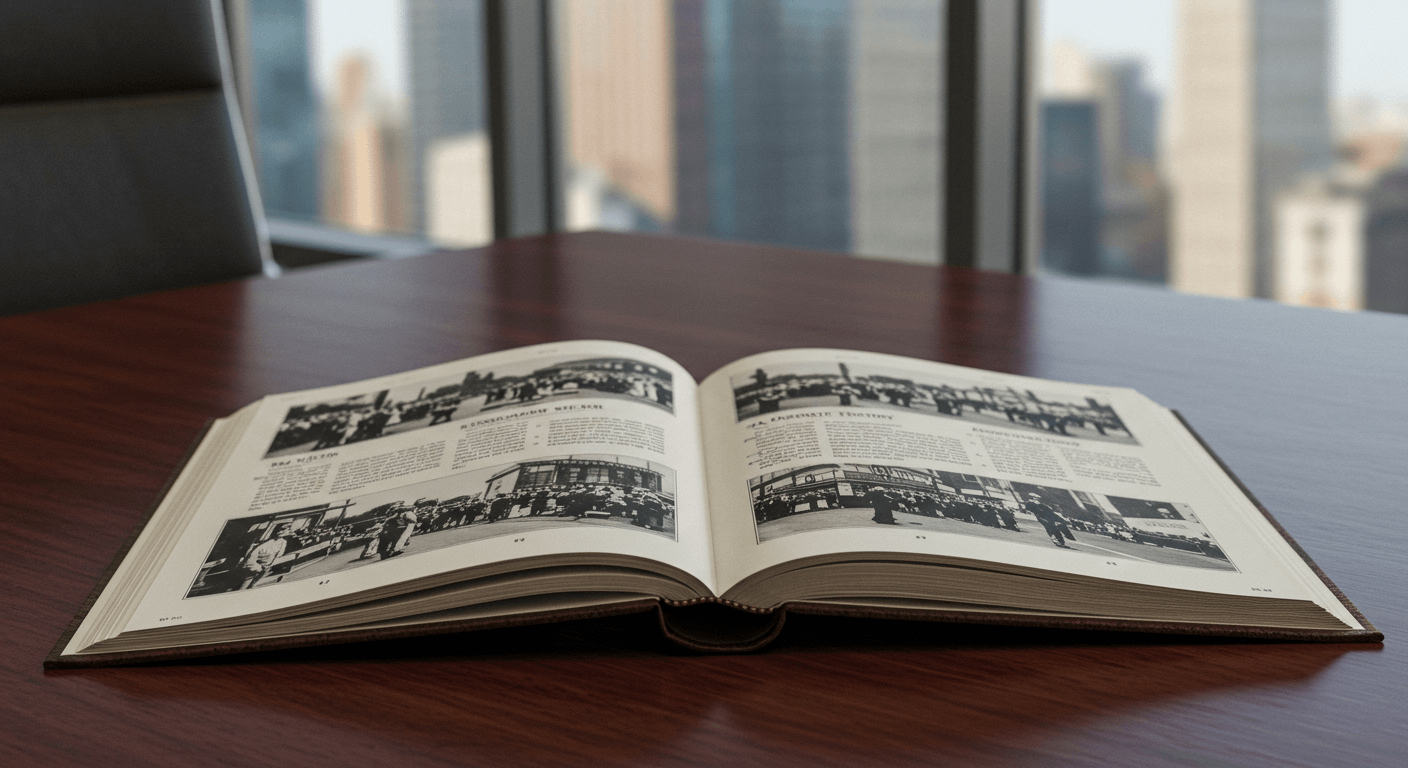
In the fast-paced world of business, companies rise, evolve, and redefine industries. Documenting this journey is more than just preserving facts—it’s about capturing the legacy, values, and identity of a brand. That’s where a corporate history book comes into play. Whether you’re a company executive, communications professional, or corporate storyteller, writing a corporate history book is both a strategic endeavor and a creative one.
In this guide, we’ll walk you through everything you need to know about how to write a corporate history book, from concept to completion.
1. Why Write a Corporate History Book?
Before diving into the process, it’s important to understand the value of such a book:
- Preserves Legacy: It commemorates the founding vision, milestones, leadership transitions, and the challenges overcome.
- Brand Storytelling: Offers a compelling narrative that reinforces brand identity and values.
- Internal Morale Boost: Engages employees and boosts pride in the organization.
- Marketing Tool: Can be used for public relations, recruitment, and investor relations.
- Anniversary Projects: Often tied to a significant anniversary (e.g., 25th, 50th year), it serves as a milestone celebration.
2. Define the Purpose and Scope
Before writing begins, clarify:
- Audience: Who are you writing for? (Employees, clients, shareholders, general public?)
- Tone and Style: Will it be formal, anecdotal, inspirational, or documentary-style?
- Format: Coffee table book, hardcover chronicle, digital eBook, or all of the above?
- Scope: Full company history? Or focused on a product line, leadership evolution, regional branch, or specific time period?
👉 Example: A multinational might need a high-gloss, image-rich book for external audiences, while a tech startup may prefer an agile digital-first publication.
3. Build Your Team
Writing a corporate history book is not a solo effort.
Key Contributors:
- Corporate Historian or Ghostwriter: A professional writer with research and storytelling expertise.
- Internal Liaison/Project Manager: Someone from the company to coordinate interviews, gather resources, and ensure accuracy.
- Design Team: For layout, visuals, branding, and final production.
- Legal and Compliance: To review content for proprietary information and factual integrity.
4. Research Thoroughly
Research is the backbone of a credible and compelling corporate history book.
Sources of Information:
- Founding Documents: Mission statements, early business plans, incorporation papers.
- Leadership Interviews: Founders, past and current CEOs, department heads.
- Employee Voices: Get stories from long-tenured and diverse staff members.
- Annual Reports & Internal Memos: Especially useful for financial and operational highlights.
- Marketing Materials: Old advertisements, logos, slogans, brochures.
- Press Coverage: Third-party validation of events or achievements.
- Archived Photos and Videos: Bring the narrative to life visually.
Tip: Create a centralized archive or database to organize research.
5. Develop the Structure and Timeline
A solid structure helps your narrative flow logically and keeps readers engaged.
Typical Chapter Breakdown:
- Founding Story: Origins, vision, first product or service, market gap.
- Growth Years: Expansion, new markets, strategic pivots.
- Milestones: IPOs, mergers, acquisitions, patents, rebranding.
- Leadership Evolution: Executive changes, cultural shifts, management styles.
- Challenges & Crises: Financial downturns, scandals, restructurings—and how they were overcome.
- Innovation & Impact: Technological advancements, societal contributions.
- Looking Ahead: Future vision, sustainability goals, digital transformation.
💡 Include timelines, quotes, infographics, and sidebars to break up the narrative.
6. Craft the Narrative
While facts and timelines are crucial, the magic lies in storytelling.
Key Writing Techniques:
- Humanize the Company: Tell stories through people. A founder’s risk, an employee’s breakthrough, a customer’s loyalty.
- Anecdotes Over Bullet Points: Instead of “We expanded to 5 countries in 1995,” try “In a dusty conference room in Madrid, the expansion deal was sealed with a handshake over churros and coffee.”
- Balanced Perspective: Don’t whitewash history. Authenticity comes from acknowledging setbacks and lessons learned.
- Consistency in Voice: Maintain a cohesive narrative voice, even when quoting multiple individuals.
7. Visual Storytelling
A picture is worth a thousand words—and in a corporate history book, they’re priceless.
Include:
- Archival Photographs: Factories, offices, employee events, product launches.
- Documents: Letters, newspaper clippings, certificates.
- Infographics: Growth metrics, market share, org charts.
- Timelines: Visualize the journey year-by-year or decade-by-decade.
Partner closely with designers to ensure images support and enhance the text.
8. Editing and Fact-Checking
A corporate book must be polished and error-free.
Steps:
- Professional Editing: For tone, grammar, and flow.
- Fact-Checking Team: Ensure every date, name, figure, and quote is accurate.
- Internal Reviews: Circulate drafts among key departments for feedback.
- Legal Review: Ensure there’s no breach of contracts, NDAs, or IP violations.
This phase can take time but is crucial for credibility.
9. Production and Publishing
Depending on your audience and goals, you may choose one or more of the following:
- Print Publication: Hardcover or softcover. Choose premium materials if it’s a keepsake.
- Digital eBook: Interactive PDFs or dedicated microsites.
- Video Integration: Use QR codes or AR to link to corporate videos and interviews.
- Limited Editions: For board members, founders, or elite clients.
Choose the right printer, publisher, or distribution partner. Make sure they understand brand integrity and timelines.
10. Launch and Distribution
Your book deserves a thoughtful release strategy.
Consider:
- Anniversary Events: Unveil the book during a gala or annual general meeting.
- Employee Gifting: Distribute internally to celebrate the collective journey.
- Investor Meetings: Use it as a trust-building asset.
- PR Campaign: Announce the launch via media releases, social media, and corporate blogs.
- Online Store or Website: For general public or alumni.
Use snippets, quotes, and images from the book to build content campaigns.
11. Case Studies of Corporate History Books
Looking for inspiration?
Examples:
- “Built to Last: Successful Habits of Visionary Companies” by Jim Collins & Jerry I. Porras – Not a history book per se, but a brilliant study of company longevity.
- “The House that Roone Built” (ABC) – Chronicles the rise of ABC under Roone Arledge.
- “The HP Way” by David Packard – Offers personal insights into HP’s culture and values.
- “I’d Like the World to Buy a Coke” – Coca-Cola’s iconic advertising history.
These serve as benchmarks for balancing narrative, strategy, and cultural insight.
12. Tips for Success
- Start Early: Corporate histories often coincide with major anniversaries—start planning 12–24 months in advance.
- Stay Neutral but Honest: Celebrate wins but don’t shy from past stumbles. Transparency builds trust.
- Tell, Don’t Sell: Avoid overt marketing language. Let the history speak for itself.
- Highlight Diversity: Represent voices from all departments, levels, and regions.
- Keep It Evergreen: Make sure the core narrative stays relevant over time.
Final Thoughts
Writing a corporate history book is a profound undertaking—it honors the past, inspires the present, and builds a narrative for the future. When done right, it not only archives information but also captures emotion, identity, and ambition. It’s more than a record; it’s a story that speaks to generations—past, present, and future.
So whether your company is celebrating 10 years or 100, now might be the perfect time to begin writing its story.