
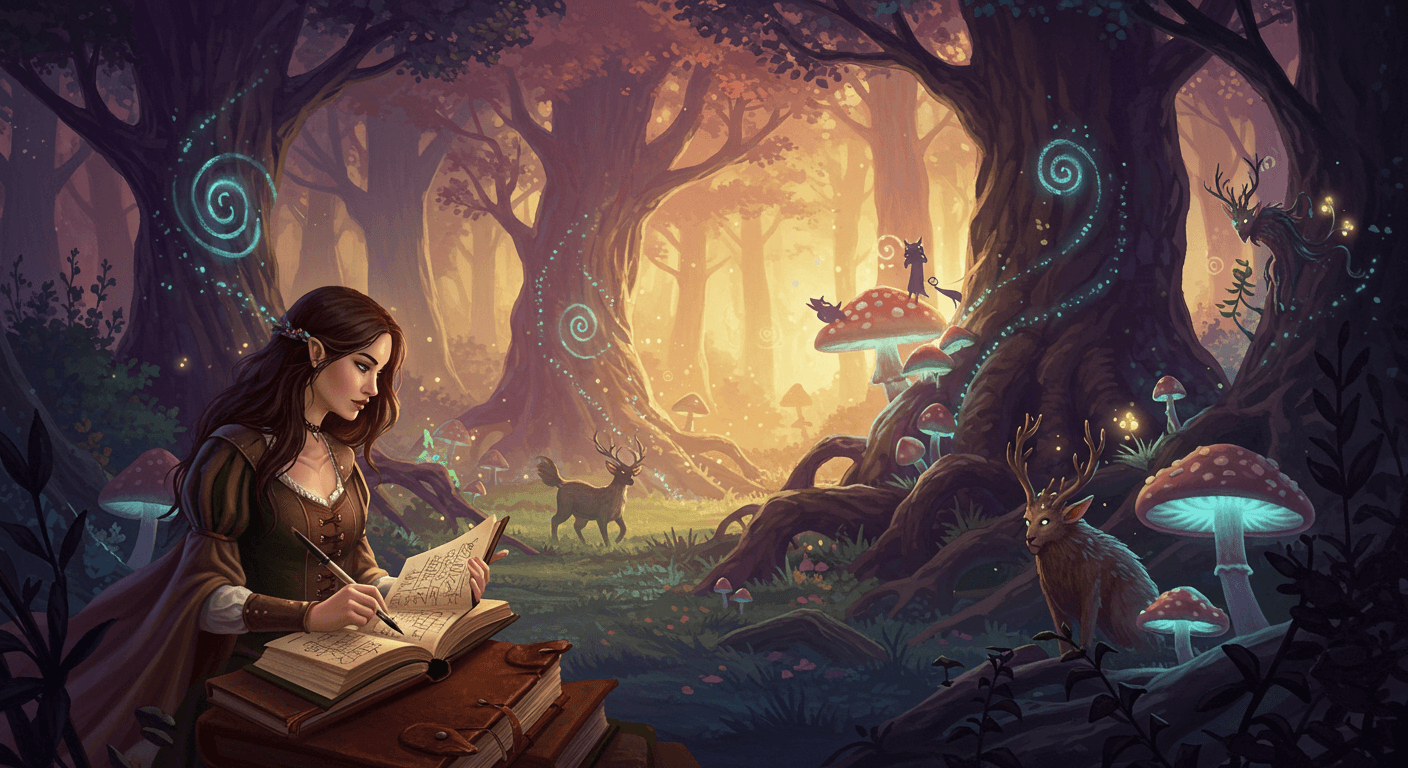
There’s a unique magic in fantasy. It’s the genre that builds entire worlds from scratch, populates them with extraordinary beings, and weaves tales of quests, ancient prophecies, and the eternal struggle between light and shadow. From the sweeping sagas of Tolkien to the intricate politics of Martin, fantasy fiction transports readers to places beyond imagination, offering escape, adventure, and profound insights into the human condition.
But how do you begin to create such a world? How do you craft characters that resonate, magic systems that feel real, and plots that keep readers turning pages through hundreds of thousands of words? Writing a fantasy story is an act of grand ambition, a blend of limitless imagination and meticulous planning. It’s not just writing; it’s creation.
If you’re ready to answer the call of adventure and build your own fantastical realm, this guide will illuminate the paths to transforming your wildest ideas into a cohesive, compelling, and unforgettable fantasy story.
Phase 1: The Core – Unleashing Your World and Idea
Your fantasy story begins with a spark, often fueled by an insatiable curiosity about “what if.”
1. The Seed of an Idea: Where Does Your Magic Begin?
Fantasy ideas can spring from anywhere:
- Mythology & Folklore: Reinterpret ancient myths or forgotten legends.
- History: Draw inspiration from historical periods, events, or cultures, then twist them with magic.
- Personal Experiences: Infuse your own emotions, relationships, or values into fantastical scenarios.
- The “What If”: What if dragons were real and ruled society? What if magic stemmed from musical notes? What if an ordinary person discovered a portal to another realm?
2. Define Your Fantasy Flavor: High, Low, or Somewhere In Between?
Understanding your subgenre sets the tone and expectations.
- High Fantasy (Epic Fantasy): Grand scope, often involving prophecies, chosen ones, clear good vs. evil, and world-shaking stakes (e.g., The Lord of the Rings).
- Low Fantasy: Magic exists, but it’s subtle, rare, or hidden within our world (e.g., urban fantasy like Dresden Files).
- Dark Fantasy/Grimdark: Gritty, morally ambiguous, often violent, with little hope (e.g., A Song of Ice and Fire).
- Portal Fantasy: Characters from our world enter a magical one (e.g., The Chronicles of Narnia).
- Other Subgenres: Urban fantasy, romantic fantasy, historical fantasy, sword and sorcery, etc.
3. World-Building Fundamentals: The Fabric of Your Reality
This is where fantasy truly distinguishes itself. Your world is a character in itself.
- History & Lore: What ancient wars were fought? What prophecies linger? What forgotten civilizations left ruins behind? A deep past adds texture.
- Geography: Draw a map! Where are the mountains, deserts, oceans, forests? What are the key cities, kingdoms, or empires? How does geography influence cultures?
- Cultures & Societies: What are the different races, their customs, religions, political systems, economies, social hierarchies, and daily lives?
- Races & Creatures: Beyond humans, what other intelligent races exist (elves, dwarves, orcs)? Give them unique traits, cultures, and roles. Are there fantastical beasts, monsters, or benevolent spirits?
- Magic System: This is critical.
- Rules: How does it work? Is it innate, learned, granted?
- Costs: What does using magic demand? (Physical exhaustion, rare ingredients, moral compromise, life force).
- Limitations: What can magic not do? This creates tension and forces creative solutions.
- Sources: Where does the power come from?
- Integration: How does magic affect daily life, technology, politics, and warfare?
- Technology Level: Is your world medieval, steam-punk, or something else entirely?
- The “Rule of Cool” vs. Consistency: While fantasy allows for incredible things, your internal logic must be consistent. If magic has rules, stick to them. If a race has traits, maintain them. Suspension of disbelief hinges on your world’s internal consistency.
Phase 2: Crafting Characters & Conflict – The Heart of Your Epic
Even in the most fantastical settings, readers connect with compelling characters and their struggles.
1. The Protagonist’s Journey: The Hero’s Arc
Fantasy often follows a variation of the Hero’s Journey (or a strong character arc).
- Call to Adventure: What event disrupts their ordinary world?
- Refusal (Optional): Why do they resist the call?
- Mentor: Who guides them or provides crucial knowledge?
- Trials & Allies: The challenges they face and the companions they gather.
- Abyss/Dark Night of the Soul: The lowest point where all hope seems lost.
- Resurrection/Transformation: Overcoming the ultimate challenge, often with a significant change in character.
- Return: Bringing their wisdom or new abilities back to their world.
2. Character Depth: Beyond Archetypes
Your characters need wants, needs, flaws, secrets, and an arc of change. How do their fantastical elements (their race, their magical abilities, their destiny) influence who they are and who they become? Show their internal struggles as much as their external battles.
3. The Antagonist: A Worthy Adversary
Your villain shouldn’t be evil just for the sake of it. Give them clear motivations, even if those motivations are twisted. What do they want? Why? What are their strengths and weaknesses? A compelling antagonist makes your hero’s journey more meaningful.
4. Core Conflict & Stakes: Why Should We Care?
- Internal Conflict: The protagonist’s personal struggles, fears, or moral dilemmas.
- External Conflict: The quest, the evil overlord, the impending war, the environmental catastrophe.
- Stakes: What will happen if your protagonist fails? For them, for their loved ones, for their entire world? The higher the stakes, the more invested the reader will be.
Phase 3: Plotting Your Epic Journey – The Narrative Spine
Fantasy narratives can be sprawling, making a strong outline indispensable.
1. The Outline is Essential: Your Story’s Blueprint
For complex fantasy, plotting is crucial. Map out:
- Major Plot Points: The inciting incident, key challenges, twists, climax, and resolution.
- Character Arcs: Where do your characters start, and where do they end up emotionally and physically?
- World-Building Reveals: Where do you introduce new aspects of your world without “infodumping”?
- Pacing Notes: Where will you build tension, slow down for reflection, or deliver a burst of action?
2. Pacing Your Narrative: Balancing Grandeur with Intimacy
- Vary Sentence/Paragraph Length: Use short, punchy sentences for intense action, longer ones for detailed descriptions or character reflection.
- Mix Big & Small: Alternate epic battles and world-shaking events with quieter, character-driven moments that allow readers to connect with the human (or non-human) element.
3. World-Building Integration: Show, Don’t Tell Your Realm
Don’t dump paragraphs of lore. Weave world details naturally into the narrative through:
- Dialogue: Characters referencing customs, history, or magic.
- Character Actions: Their behavior reflects cultural norms or magical abilities.
- Sensory Details: Describe the unique architecture, the strange flora, the scent of a magical artifact.
4. Subplots: Enriching the Main Narrative
Supporting character arcs, romantic tensions, or side quests can add depth and complexity, but ensure they ultimately feed back into the main storyline.
5. Theme: The Deeper Message
What grand ideas are you exploring beneath the magic and monsters? Good versus evil, the nature of power, sacrifice, destiny versus free will, prejudice, healing from trauma? These themes elevate your story from mere entertainment to lasting art.
Phase 4: Drafting & Bringing the World to Life – The Words Themselves
Now, open your word processor and let your imagination flow.
1. Show, Don’t Tell: Especially for the Fantastic
Don’t just say “the dragon was huge.” Describe its scales shimmering like obsidian, the heat radiating from its nostrils, the tremor in the ground with each footfall. Make your fantastical elements feel real through vivid sensory details.
2. Sensory Details: Immerse the Reader
Beyond sight, what do your characters hear, smell, taste, and feel in your world? The clang of steel, the scent of ozone after a spell, the rough texture of a dungeon wall – these details pull readers in.
3. Dialogue: Voices from Other Worlds
Give your characters distinct voices. How does their race, culture, or magical ability influence their speech patterns, vocabulary, or way of thinking?
4. Infodumping Avoidance: The Gentle Reveal
Resist the urge to dump all your brilliant world-building at once. Introduce details gradually, when they are relevant to the plot or character experience. Let the reader discover the world alongside your protagonist.
5. First Draft Focus: Embrace the Mess
Your first draft is about getting the story out. It will be imperfect, clunky, and have gaps. That’s okay! Don’t stop to edit or polish. Just keep moving forward, following your outline, until you type “The End.”
Phase 5: Revision & Polish – Refining the Magic
The true art of fantasy often takes shape in the revision process.
1. Structural Pass: The Grand Overhaul
- Plot Holes: Identify and fix any inconsistencies in your world’s rules or your plot’s logic.
- Pacing: Are there parts that drag? Do key moments land with enough impact?
- Character Arcs: Are they believable? Do your characters grow and change authentically?
- World-Building Consistency: Double-check that your magic system rules, racial traits, and historical events are consistent throughout.
2. Clarity & Flow: Is Your Epic Understandable?
For complex fantasy, clarity is paramount. Is your intricate plot easy to follow? Are new concepts introduced clearly?
3. Language & Imagery: Elevate Your Prose
Refine your writing. Use strong verbs, evocative adjectives, and rich imagery to enhance the fantastical elements. Ensure your tone is consistent with your chosen subgenre.
4. Proofreading: The Final Spell Check
Eliminate typos, grammar errors, and punctuation mistakes. A polished manuscript shows professionalism.
5. Seek Feedback: The Guild of Readers
Beta readers, especially those who love fantasy, are invaluable. They can spot confusing world-building, plot holes, or areas where the magic doesn’t quite work. Listen to their feedback with an open mind.
Writing a fantasy story is an immense undertaking, a journey into the uncharted territories of your own imagination. It’s a testament to patience, creativity, and perseverance. But the reward – a vibrant, living world born from your mind, filled with characters and tales that resonate with others – is truly magical.