
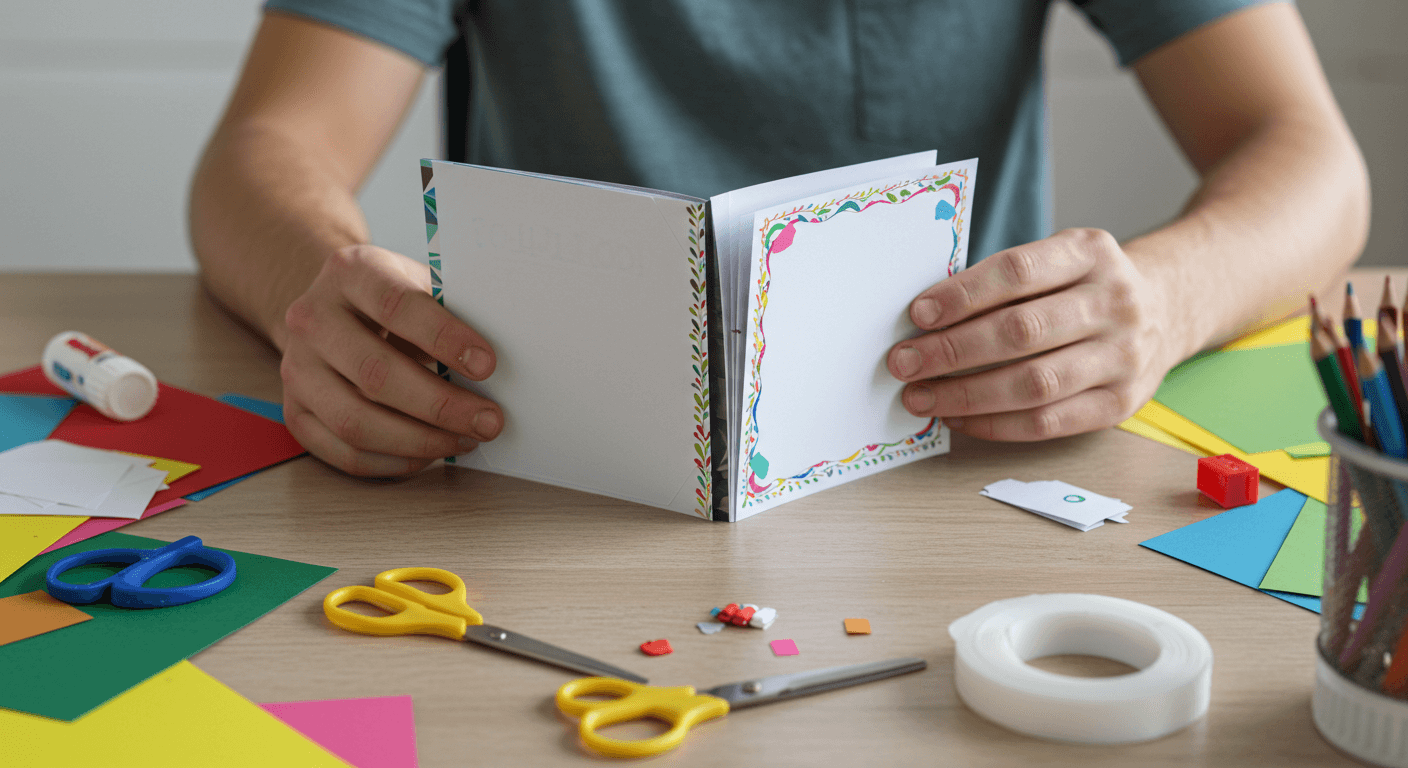
The idea of writing a “book” often brings to mind hefty tomes, thousands of words, and months, if not years, of dedication. But what if the goal is something smaller, more immediate, and equally impactful? What if the aim is to create a book with just 10 pages? This isn’t a shortcut to a bestseller, but rather a powerful exercise in conciseness, clarity, and creative storytelling. From the ghostwriter’s perspective, crafting such a compact piece is an art form in itself, demanding precision and purpose on every single page.
This guide will walk you through the surprising depth and potential of a 10-page book, whether it is a child’s first story, a promotional tool, a personal gift, or a unique artistic statement. Think of it as a concentrated dose of storytelling, where every word and every image have to earn its place.
Why a 10-Page Book? The Power of Tiny Tales
Before diving into the “how,” it’s worth understanding the “why.” What makes a 10-page book a valuable project?
Accessibility:
- For new writers, the sheer scale of a novel can be paralyzing. A 10-page book is far less intimidating, offering a manageable goal that builds confidence.
Focus on Core Ideas:
- Limited space forces a writer to strip away anything unnecessary. This sharpens the central message or narrative.
Quick Production:
- These books can be created relatively fast, making them ideal for time-sensitive projects or for experimenting with different ideas.
Engaging for Readers:
- A short, impactful book can be consumed quickly, leaving a strong impression. It’s perfect for capturing attention in a fast-paced world.
Versatility:
- A 10-page format is incredibly adaptable. It can be a simple picture book, a concise guide, a poetic reflection, or even a mini-comic.
From a ghostwriter’s viewpoint, clients often request these smaller projects for very specific purposes: a pitch deck for investors, a unique marketing brochure, a personalized gift for a loved one, or even a proof-of-concept for a larger story idea. The challenge is to distill the essence of their message into a powerful, bite-sized package.
The Blueprint: What Goes On (and In) Each Page
Making a 10-page book isn’t just about randomly filling pages. Each page has a role to play, contributing to the overall flow and impact. Here’s a breakdown of what to consider for each of your precious 10 pages:
Page 1: The Cover
This is the first impression. It needs to be eye-catching and clearly state what the book is about.
- Title: Clear, intriguing, and relevant.
- Author/Creator: Your name, or the client’s name (for ghostwritten projects).
- Key Image/Design: A compelling visual that represents the content. This could be a drawing, a photograph, or an abstract design.
Page 2: Title Page & Copyright
Often overlooked in quick projects, but important for formality and ownership.
- Full Title: Repeat the title clearly.
- Author/Illustrator/Ghostwriter: List all contributors.
- Copyright Information: A simple copyright notice (e.g., “© [Year] [Your Name/Company]”).
- Optional: A short dedication or epigraph (a short quote that sets the tone).
Page 3: Introduction/Hook (The Grand Opening)
This is where the story truly begins or the main idea is introduced.
- For Fiction: Establish the setting, introduce the main character, or present the initial problem/question. Create an immediate hook.
- For Non-Fiction/Guide: State the purpose of the book, what the reader will learn, or the main problem it solves.
Page 4-8: The Core Content (The Narrative Engine)
These five pages are the heart of your 10-page book. They must efficiently develop the story, explain the concept, or present the information. Each page should advance the narrative or argument in a clear, concise way.
Page 4:
- Develop the initial idea. Introduce a challenge, a new character, or an important piece of information.
Page 5:
- Build on Page 4. Show a consequence, a step in a process, or a deeper dive into the topic.
Page 6:
- The turning point or central revelation. This could be where the main character faces a key decision, a crucial piece of data is revealed, or the core argument is fully presented.
Page 7:
- Reaction or complication. How does the character respond to the turning point? What new information arises?
Page 8:
- Leading to the conclusion. The final push towards the resolution, or the summary of key takeaways.
Page 9: Conclusion/Resolution (The Wrap-Up)
This page brings everything to a satisfying close.
- For Fiction: Resolve the main conflict, show the character’s growth, or leave the reader with a thoughtful idea.
- For Non-Fiction/Guide: Summarize the key points, offer a call to action, or provide a final piece of advice.
Page 10: Back Cover/About the Author/Call to Action
This final page often serves multiple purposes.
- For Fiction: A short blurb, a brief “about the author” section, or a suggestion for further reading.
- For Non-Fiction/Promotional: Contact information, website, social media handles, a QR code, or a strong call to action (e.g., “Visit our site to learn more!”).
Ghostwriter’s Tip: When structuring these pages, think in terms of beats. Each page needs a clear purpose, a “beat” that moves the story or information forward. No page should feel like filler. For a ghostwriter, this means tightly coordinating with the client to ensure their core message is articulated efficiently across these few pages.
The Content Creation Process: From Idea to Tiny Text
Now that the structure is clear, let’s look at the steps to create the actual content for your 10-page book.
1. Define Your Purpose and Audience
Before writing a single word, ask:
- What is the goal of this book? To entertain, inform, persuade, inspire?
- Who is the audience? Children, experts, potential customers, family members?
- What is the single most important message or story to convey?
For ghostwriting projects, this phase is crucial. A client might say, “I want a book about innovation.” The ghostwriter’s job is to narrow that down: “Do you want to explain how to innovate, why innovation is important, or tell a story about an innovator?” This clarity then dictates the entire direction.
2. Brainstorm and Outline (The Mini-Map)
Even for 10 pages, an outline is essential.
Core Idea:
- Write down the central concept in one sentence.
Key Points/Plot Points:
- List the absolute minimum number of points needed to tell the story or explain the idea. Aim for 5-7 core points, one for each “content” page.
Visuals:
- What kind of images, illustrations, or design elements will accompany each page? Visuals are incredibly important in a short book to convey meaning quickly.
Ghostwriters often develop a “mini-synopsis” that outlines what each of the 10 pages will cover before drafting begins. This ensures client approval on the flow before significant writing time is invested.
3. Write Concisely (Every Word Counts)
This is where the real challenge and art of a 10-page book come into play.
Word Count Per Page:
- Depending on font size and design, each page might only hold 50-150 words. Be ruthless with your words.
Strong Verbs and Nouns:
- Use active voice. Avoid unnecessary adjectives and adverbs.
Short Sentences and Paragraphs:
- Keep the text easy to read and digest.
Focus:
- Each sentence, each paragraph, must contribute directly to the page’s purpose and the overall narrative.
As a ghostwriter, the skill of distillation is paramount here. Taking complex ideas and boiling them down to their absolute essence, ensuring every word serves a purpose, is a core part of the job. It’s about maximizing impact in minimal space.
4. Design and Layout (Visual Storytelling)
The visual aspect is as important as the text, especially for short books.
Page Size and Orientation:
- Will it be portrait, landscape, or square?
Font Choices:
- Readable, but also reflective of the book’s tone.
Image Integration:
- How do text and images work together? Do images tell part of the story, or do they simply illustrate the text? In a 10-page book, images often carry significant narrative weight.
White Space:
- Don’t overcrowd pages. Give the reader’s eye room to breathe.
Many ghostwriters work closely with designers, or provide detailed visual briefs, understanding that the final presentation significantly impacts how a 10-page book is received.
5. Review and Refine (The Polish)
Even small books need careful review.
Read Aloud:
- This helps catch awkward phrasing, repetitive words, and pacing issues.
Check for Clarity:
- Is the message absolutely clear on every page?
Consistency:
- Are names, facts, and themes consistent throughout?
Proofread:
- Catch any typos or grammatical errors. Even one small mistake can distract from the impact.
Get Feedback:
- Ask someone else to read it. Do they understand the message? Are they engaged?
A ghostwriter views this as a crucial quality control step. Ensuring the client’s message is perfectly conveyed, without error, is a cornerstone of professional service.
Ghostwriting a 10-Page Book: The Collaborative Process
When a client approaches a ghostwriter for a 10-page book, the process is streamlined but still rigorous.
Initial Consultation:
- Understanding the client’s vision, target audience, and the book’s specific purpose. This includes discussing the overall tone and desired outcome.
Content Extraction:
- This is where the ghostwriter excels. Through interviews, existing notes, or brainstorming sessions, the essential information or story elements are carefully pulled out. The ability to ask precise questions to get to the core of an idea is vital.
Outline Development:
- A detailed 10-page outline is created, often with a proposed “content beat” for each page. This ensures the client agrees with the flow and pacing before words are written.
Concise Drafting:
- The ghostwriter then crafts the text for each page, focusing on economy of language, impact, and clarity.
Revision Rounds:
- Typically, a few rounds of revisions are included, allowing the client to provide feedback and refine the content until it perfectly matches their vision.
Design Liaison (Optional):
- Many ghostwriters can also work with designers to ensure the text and visuals integrate seamlessly, sometimes even offering art direction or suggesting imagery.
The ghostwriter’s value in this compact format lies in their ability to quickly grasp a concept, distill it to its core, and articulate it with professional polish and precision. They bring objectivity and expertise to ensure that every one of those 10 pages delivers maximum impact.
Beyond the Pages: Distribution and Impact
Once the 10-page book is complete, consider how it will be shared.
Digital Format:
- A PDF is easy to distribute via email, websites, or social media.
Print-on-Demand:
- Services allow for small print runs if physical copies are desired for gifts, marketing, or personal use.
Interactive Versions:
- For digital use, consider adding clickable links or embedded media if the platform allows.
A 10-page book, though small, can have a surprisingly large impact. It forces clarity, encourages focus, and provides a tangible output that feels like a significant accomplishment. Whether it’s a personal project or a ghostwritten commission, mastering the art of the miniature book is a valuable skill in the world of storytelling and communication. It proves that powerful narratives don’t always need hundreds of pages; sometimes, a concise, well-crafted 10-page journey is all that’s needed to leave a lasting impression.